

Witness the Power of Technology and the Vitality of Youth at Tianjin University's Crabapple Blossom Season
The Crabapple Blossom Season at Tianjin University has unfolded amidst the fragrance of blossoms. With open labs showcasing cutting-edge technologies, demonstrations of innovations, and performances of intangible cultural heritage, the event is imbued with the unique fragrance of a fusion between technology and culture.
Under the spotlight, a mechanical arm, guiding a specialized probe, was scanning a piece of bronze ware. On a nearby computer screen, the three-dimensional and microscopic structure of the artifact was displayed in real time.
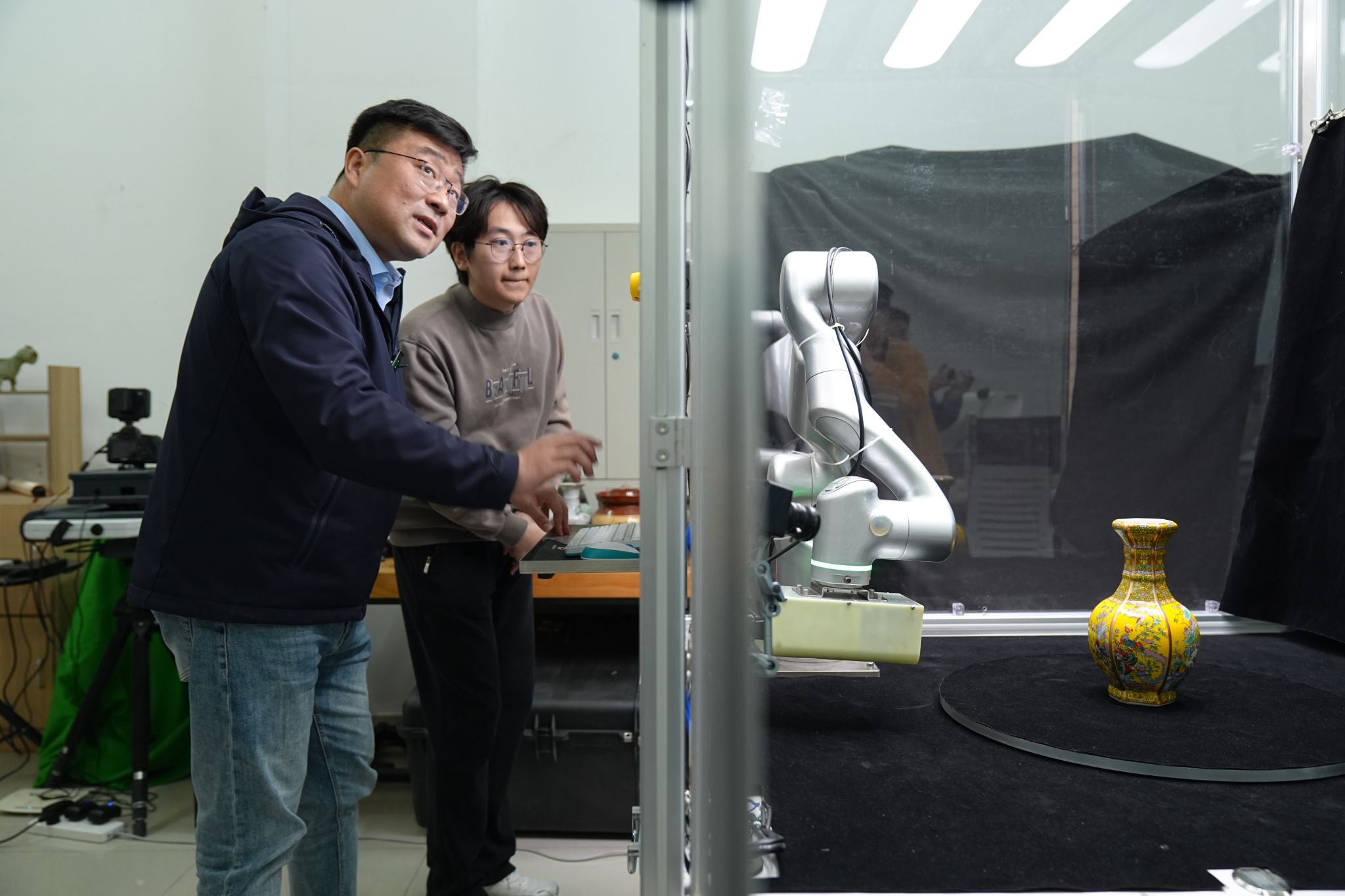
“This is creating a 'digital fingerprint' for cultural relics,” explained Professor Feng Wei from the School of Computer Science and Technology. Unlike traditional identification methods such as lacquer seals and labels, these digital fingerprints are generated based on the unique physical randomness of the relics' surface—natural, secure, and one-of-a-kind. After capturing micro-features of the relic, the system automatically selects key points for encoding to generate the digital fingerprint. The technology not only authenticates relics but also detects sub-millimeter changes, supporting preventive conservation and condition monitoring. It has been deployed at major cultural institutions including the Dunhuang Academy, the Palace Museum, the Emperor Qinshihuang's Mausoleum Site Museum, and the Hunan Museum.
With over five thousand years of Chinese civilization—from the flowing colors of Dunhuang murals to the majestic passes of the Great Wall, from the bracketed eaves of ancient architecture to the gentle luster of national treasures—these artifacts carry the roots and soul of the nation, yet slowly decay and fade over time. Many researchers at Tianjin University are using technology as a tool, an eye, and a shield to silently protect Chinese civilization. During Crabapple Blossom Season, these innovations for cultural preservation will be showcased in open laboratories.
The ten-micron-level in-situ monitoring technology developed by Tianjin University's School of Computer Science and Technology acts like a pair of precise “eyes,” closely observing minor damages on murals and ancient buildings, helping to “treat diseases before they occur.” From the Mogao Caves in Dunhuang to the Forbidden City and the Summer Palace, numerous cultural heritage sites are resisting the erosion of time under the protection of this technology.
Research teams from Tianjin University's School of Architecture use drone aerial photography, 3D laser scanning, and other technologies to “archive and image” ancient buildings and the Great Wall. With millimeter-level precision, they collect billions of point cloud data points to accurately restore every trace of craftsmanship. The solemnity of the Jin Temple, the grandeur of the Great Wall, and the exquisite craftsmanship of the Dule Temple are all recreated as “digital twins” in the digital world, allowing their thousand-year-old spirit to be permanently preserved and passed down through generations.
Tianjin University's unique “cultural relic fingerprint” technology provides each national treasure with an exclusive “digital ID card.” Its features—rapid single-point comparison in just three minutes and non-destructive operation—offer a cutting-edge technological solution for the identity management of cultural relics.
Tianjin University's synthetic biology team has innovated a DNA storage algorithm, encoding Dunhuang murals into DNA, a method that could preserve them for tens of thousands of years.
The flower essential oil protection and restoration technology, developed by Tianjin University's School of Life Sciences, silently protects ancient paintings and wooden artifacts with fragrance…
The nourishment of traditional culture can also expand the depth and breadth of scientific development. As spring returns to Tianjin University and the crabapple flowers bloom, one can witness the power of technology.
In the globally cutting-edge research field of brain-computer interaction, Tianjin University is one of the main R&D bases. Researchers from the Haihe Laboratory of Brain-Computer Interaction and Human-Machine Integration noted that the team's independently developed “Shen Gong” series of non-invasive brain-computer interface medical devices derive their name from a line in Song Dynasty poet Su Shi's masterpiece “Mirage”: “Knowing all seen are illusions, I dare to trouble the divine work with ears and eyes.” The name is also an abbreviation for the field of “neural engineering,” to which brain-computer interfaces belong—a clever pun carrying profound meaning.
The National Facility for Earthquake Engineering Simulation will open its doors, offering an immersive experience with its earthquake simulation shaking table. Key State Laboratories—including those for Hydraulic Engineering, Low-Carbon Chemical Engineering, Precision Testing, and Advanced Medical Materials and Medical Devices—along with multiple national and provincial/municipal science popularization bases, will provide public science lectures explaining the power of technology. Hardcore scientific and innovative achievements such as brain-computer interfaces, metamorphic robots, embodied intelligent inspection robots for ancient architecture, and air-battery-powered model cars will be on display during the event. Visitors can also try their hand at building and creating with a superconducting magnetic levitation device, an electromagnetic cannon, chemical secret messages, poetic experiments in fluid mechanics, synthetic biology card games, and drone football. Tianjin University's Crabapple Blossom Season makes technology tangible, creative, and participatory.
In the labs, Tianjin University researchers use robust technology to protect Chinese civilization and build an innovative China. Outside the labs, they have a passion for traditional culture. During Crabapple Blossom Season, they wear traditional Hanfu, cosplay as the Black Myth: Wukong character, adorn their hair with flowers while strolling through spring, and play ancient games like pitch-pot, actively inheriting Chinese culture. The Feng Jicai Museum will open its doors, inviting visitors to a warm encounter with precious collections and traditional cultural heritage. Several intangible cultural heritage items, including Yuan-style Pingshu (storytelling), Zeng-style cloth buttons, cloisonné filigree and inlay techniques, and hair flower arranging, will be showcased live.

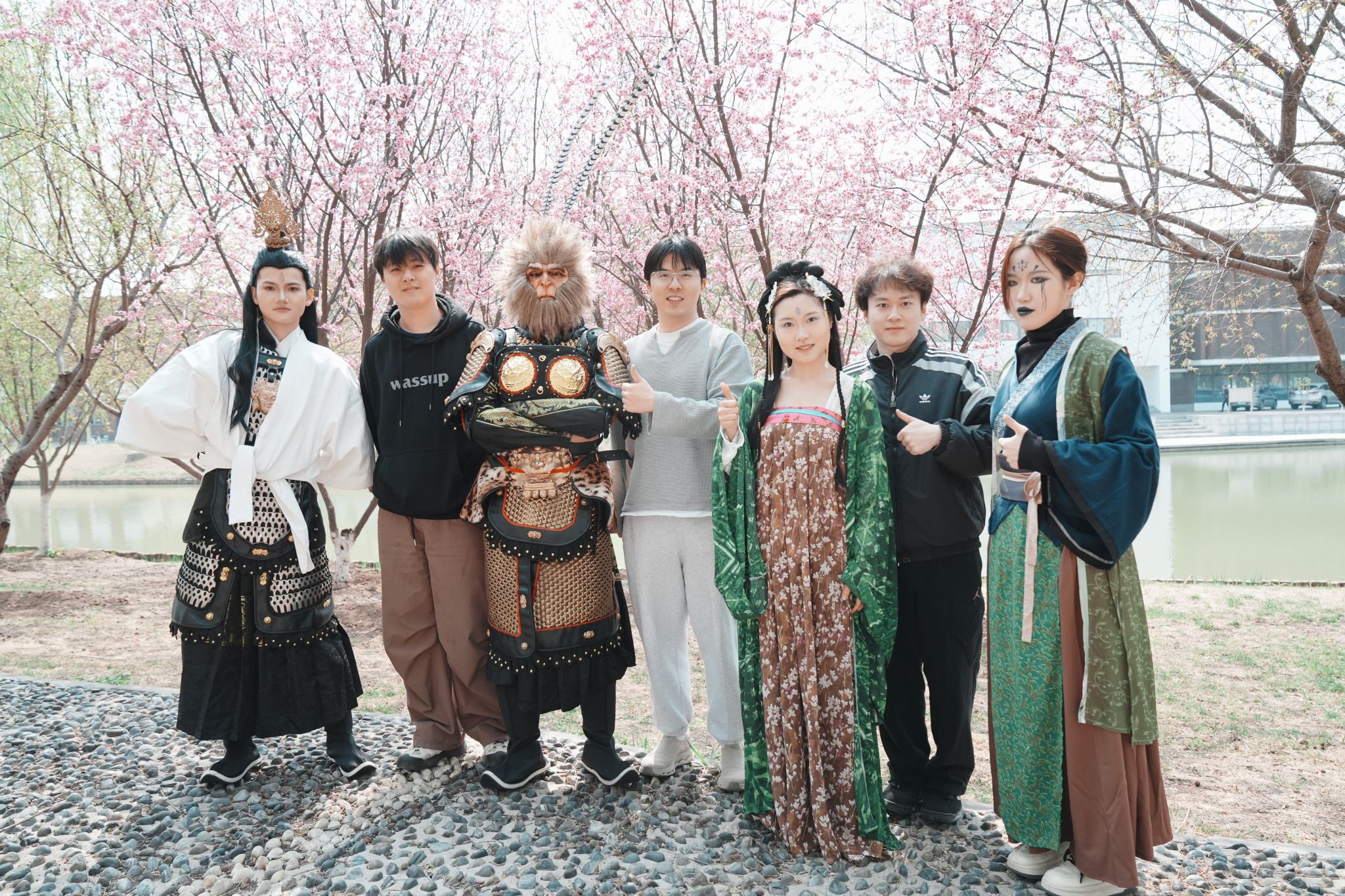
The flowers are in full bloom, and youth is striving—truly living up to the promise of spring. The 2026 Tianjin University Crabapple Blossom Season Open Day will be held over eight consecutive days, from April 4th to April 11th. Cultural events will be concentrated at the Weijin Road Campus on April 6th, and at the Peiyang Park Campus on April 11th.
By: Yu Boyang
Weijin Road Campus: No. 92 Weijin Road, Nankai District, Tianjin
300072
Peiyangyuan Campus: No.135 Yaguan Road, Haihe Education Park, Tianjin
300350