

Mineral Substrates as Evolutionary Drivers of Soil Microbial Diversity through Rare Biosphere
A research team led by H. Hnery Teng at the School of Earth System Science, Tianjin University, collected soil samples from three typical agricultural regions to establish initial microbial communities. In nutrient-rich culture media, they introduced six types of minerals—including nutrient-rich minerals/rocks (olivine, granite, diorite) and nutrient-poor minerals (quartz, kaolinite, montmorillonite)—and conducted long-term laboratory evolution experiments to simulate prolonged natural selection processes.
Soil microorganisms, as the crucial engines driving Earth's biogeochemical cycles, govern key processes such as the carbon cycle, nutrient transformation, and organic matter decomposition. Previous research has predominantly focused on environmental factors like climate, pH, and nutrients, often treating the minerals widely present in soil as passive backgrounds. In reality, the "mineralosphere"—the micro-environment surrounding mineral particles—is a unique habitat, yet its ecological and evolutionary functions have long lacked in-depth investigation.
Through their study, the research team led by H. Hnery Teng found that minerals significantly alter community structure. All mineral treatments increased the proportion of the phyla Firmicutes and Bacteroidetes, indicating that the communities evolved towards a state more adept at utilizing labile carbon sources. Rare Taxa are key responders. The community changes were primarily driven by rare taxa (relative abundance < 0.1%). Different minerals selectively enriched distinct rare taxa; for example, montmorillonite promoted bacteria genera known for producing short-chain fatty acids. Inert minerals also exhibit "activity". Even chemically inert quartz significantly influenced community composition. This suggests that the physical structure of mineral surfaces alone can act as an "environmental filter," supporting the colonization and functional differentiation of specific microorganisms. Under mineral-driven selection, rare taxa contributed complementary metabolic functions, enhancing the community's functional redundancy and ecological resilience. This provides a "insurance mechanism" for soil to cope with environmental changes.
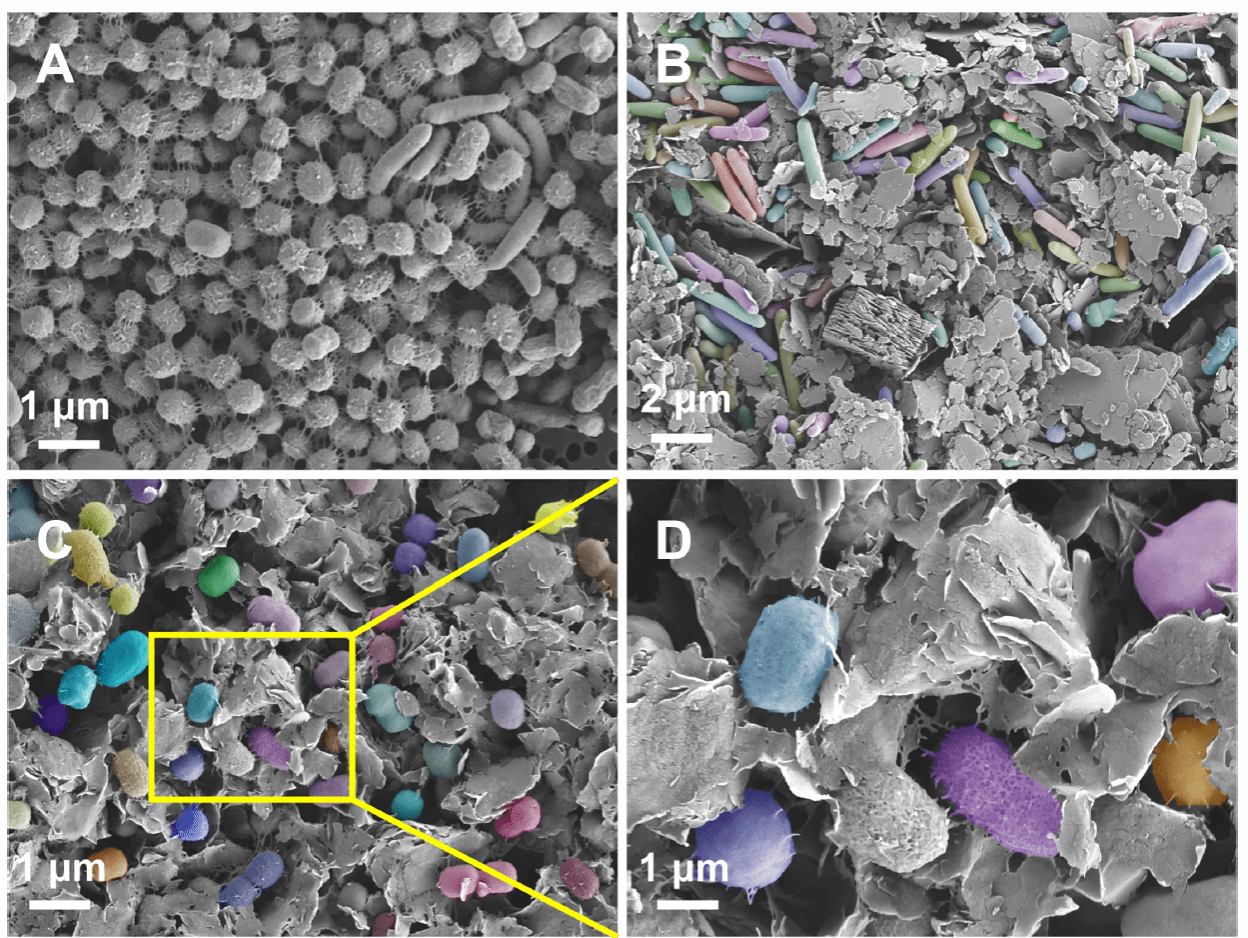
The relevant findings have been published in Applied and Environmental Microbiology, a classic journal of the American Society for Microbiology. Beibei Wang, a doctoral student at the School of Earth System Science, Tianjin University, is the first author of the paper, with Associate Professor Jianchao Zhang and Professor H. Henry Teng serving as corresponding authors.
For details, please visit:
Beibei Wang, Jianchao Zhang*, Xiangyu Zhu, Yuebo Wang, H. Henry Teng*. 2026. Mineral substrates as evolutionary drivers of soil microbial diversity through the rare biosphere. Applied and Environmental Microbiology. e02011-25.
By School of Earth System Science
Editor: Sun Xiaofang
Weijin Road Campus: No. 92 Weijin Road, Nankai District, Tianjin
300072
Peiyangyuan Campus: No.135 Yaguan Road, Haihe Education Park, Tianjin
300350