

Youth Tribe Unlocks a Sustainable Future for Fural Areas through Design
What sparks might fly when 13 young talents from Poland, Cambodia, Laos and China step into the countryside of Changle, Fuzhou? On the last day of 2025, postgraduate students from the School of Architecture, Tianjin University, gave the answer with creative and dynamic final presentations. Divided into four groups, they created the “Youth Tribe” and unlocked new possibilities for rural sustainable development with their transdisciplinary integrated design thinking.
The design site is located in the rural area of Changle, Fuzhou. Over the next three decades, 70% of the world’s built environment will undergo reconstruction and renewal, making rural areas the ideal testing ground for sustainable development concepts. This place is not only a convergence point where traditional construction wisdom collides with modern technological innovation, but also a practical stage for the dynamic balance between demographic structure changes and ecological carrying capacity.
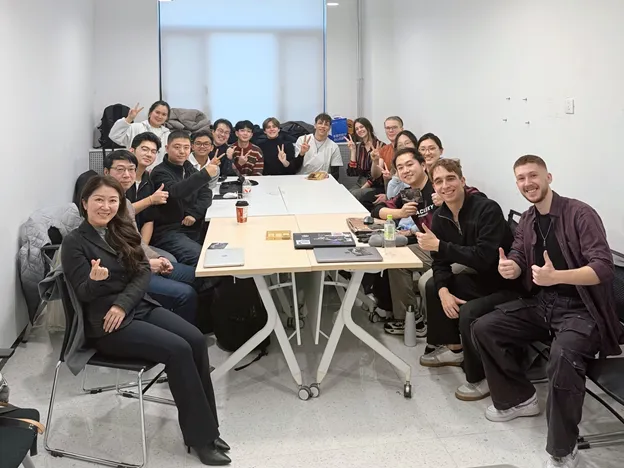
This course adopts a group collaboration model to explore the path of sustainable design integrating multiple disciplines. Under the guidance of Dr. Liu Xiangfeng and Dr. Xu Miao, the participants completed an innovative and feasible design scheme of the “Youth Tribe” with an international perspective and forward-looking thinking. The course requires participants to conduct systematic thinking from multiple dimensions including planning layout, energy utilization, ecological protection, landscape construction, transportation organization, architectural design, structural selection, and material application, and finally create a high-quality youth tribe space that can respond to natural resource endowments, inherit historical and cultural context, and stimulate community vitality. At the same time, the course also focuses on cultivating participants’ group collaboration ability, knowledge sharing awareness and presentation skills.
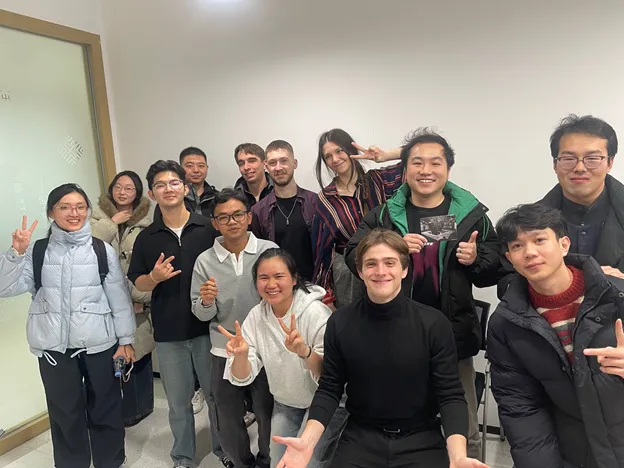
Upon conclusion of the course, all participants expressed that they had gained substantial benefits, and put forward many valuable suggestions and sincere expectations for the course’s future development.
Ultimately, this course expects participants to deeply understand that: Low-Impact Development is a respect and response to the inherent conditions of the site, and also an important prerequisite for ensuring building safety and human well-being; multidisciplinary intergration is not a simple form of piecing together, but a complement and synergy of thinking modes; the harmonious dialogue between architecture and the environment can be achieved through sustainable design methods that follow nature. All these dimensions of “transdisciplinary” will eventually radiate lasting vitality in every design work that respects ecology and embraces diversity. May this journey of mutual learning between teaching and learning allow the concept of sustainable development to shine with new brilliance in inheritance and innovation.
Supervisors:
XU Miao (PhD, KTH Royal Institute of Technology, Sweden; Senior Engineer; Class A Registered Architect)
LIU Xiangfeng (PhD, Illinois Institute of Technology, USA; Associate Professor; Class A Registered Architect)
By School of Architecture
Editor: Sun Xiaofang
Weijin Road Campus: No. 92 Weijin Road, Nankai District, Tianjin
300072
Peiyangyuan Campus: No.135 Yaguan Road, Haihe Education Park, Tianjin
300350