

Critical but Underquantified Component of the Global Carbon Budget Constrained by Multiple Isotopic Evidence
Tianjin University research team recently combined hydrogeochemical surveys, stable isotopes, clumped isotopes, and radiocarbon analyses to systematically reveal the biogeochemical cycling patterns of methane in urban waters during freeze-thaw events. The findings were published in Water Research (Nature Index journal), with Han Jiaxu (2025 Master’s graduate) as the first author, Dr. Wang Xinchu as the corresponding author, and Professors Li Si-Liang, Ran Lishan, and Robert Mark Ellam as co-advisors. Collaborators came from the University of Hong Kong, the University of Glasgow, and other institutions.
Emerging methane clumped isotope (Δ13CH3D and Δ12CH2D2) and radiocarbon (Δ14C-CH4) techniques offer new insights into methane cycling during freeze-thaw processes. Greenhouse gas emissions from inland water bodies to the atmosphere are a significant driver of global warming. Seasonal freeze-thaw events have unclear impacts on methane generation, transformation, and emissions.
The study of the resarch team found that freeze-thaw processes significantly alter methane emission pathways and fluxes, accelerating greenhouse gas release in small urban aquatic systems. During freeze-thaw, methanogenesis intensifies, substantially increasing warming potential, while oxidation serves as a critical mechanism limiting methane accumulation, highlighting its importance in urban water carbon emission assessments. Isotopic evidence further indicates that aceticlastic methanogenesis dominates during freeze-thaw. The process induces reversible enzyme reaction changes, leading to pronounced clumped isotope kinetic fractionation. Radiocarbon evidence shows coupling between substrate availability and carbon transformation.
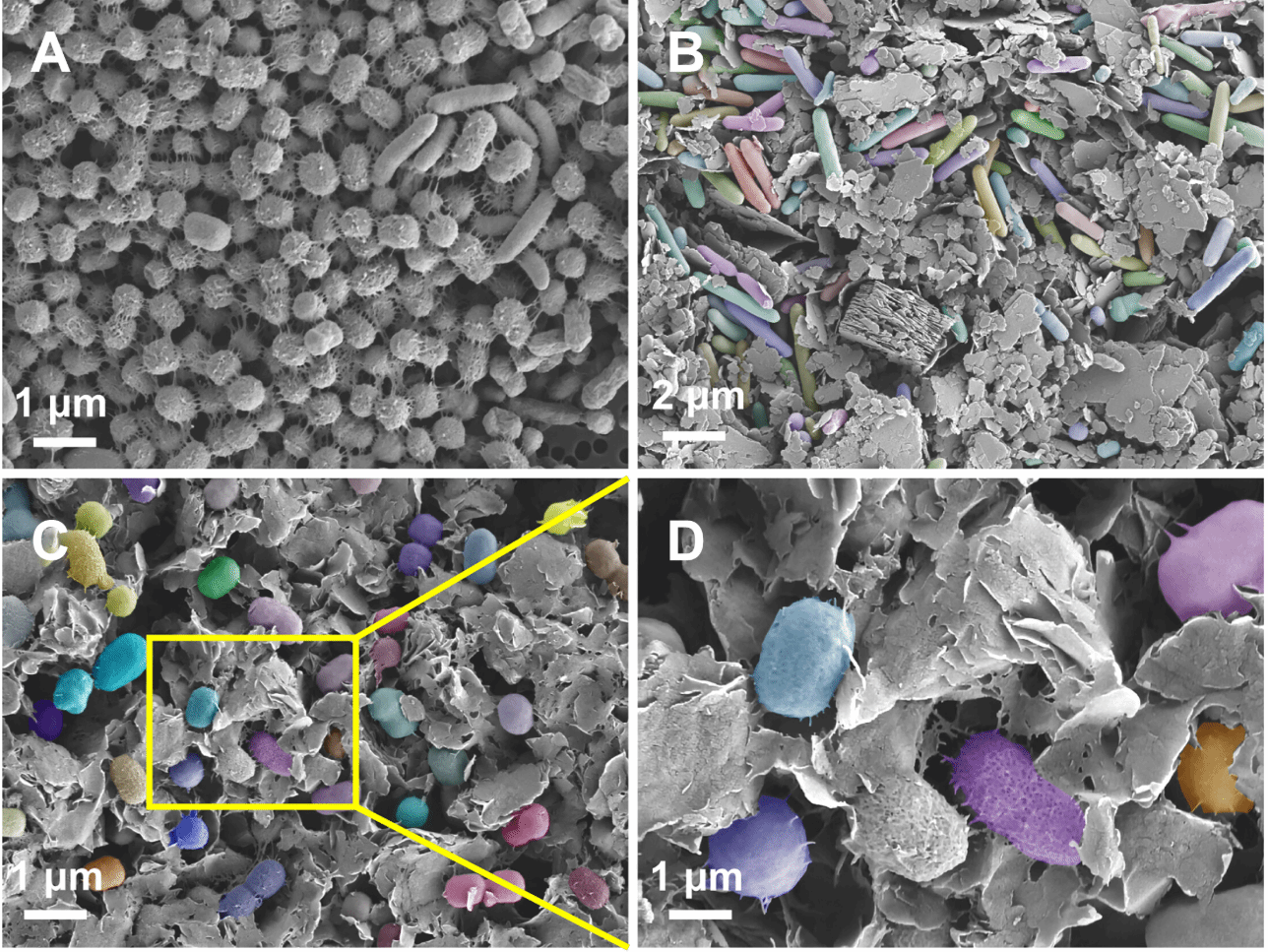
This study is the first to integrate multiple isotope systems to reveal the dynamic mechanisms of methane cycling and carbon source age evolution in urban waters during freeze-thaw. It not only deepens our understanding of greenhouse gas emissions under seasonal environmental changes but also provides critical data and methods for urban water carbon management and future climate model predictions.
For more information, please visit: https://doi.org/10.1016/j.watres.2025.125200.
By School of Earth System Science
Editor: Sun Xiaofang
Weijin Road Campus: No. 92 Weijin Road, Nankai District, Tianjin
300072
Peiyangyuan Campus: No.135 Yaguan Road, Haihe Education Park, Tianjin
300350