

“Sui Ming” Optical AI Model Wins National Innovation Award
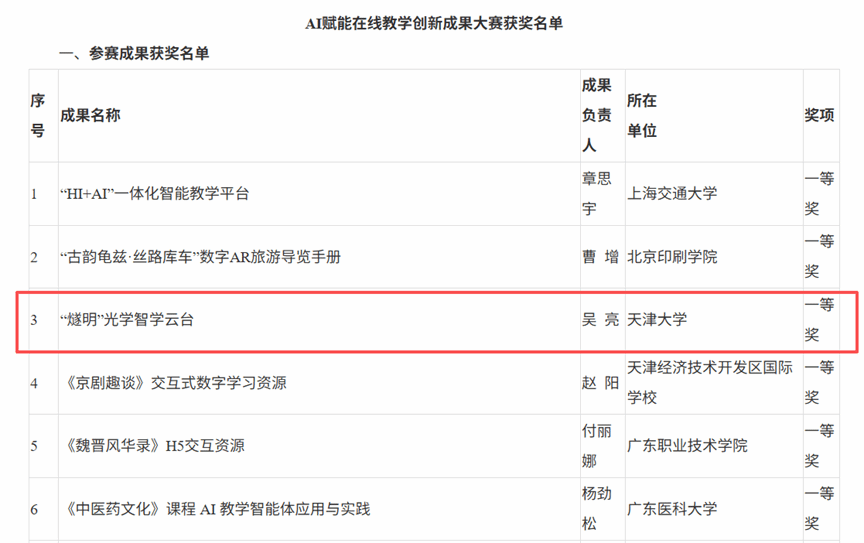
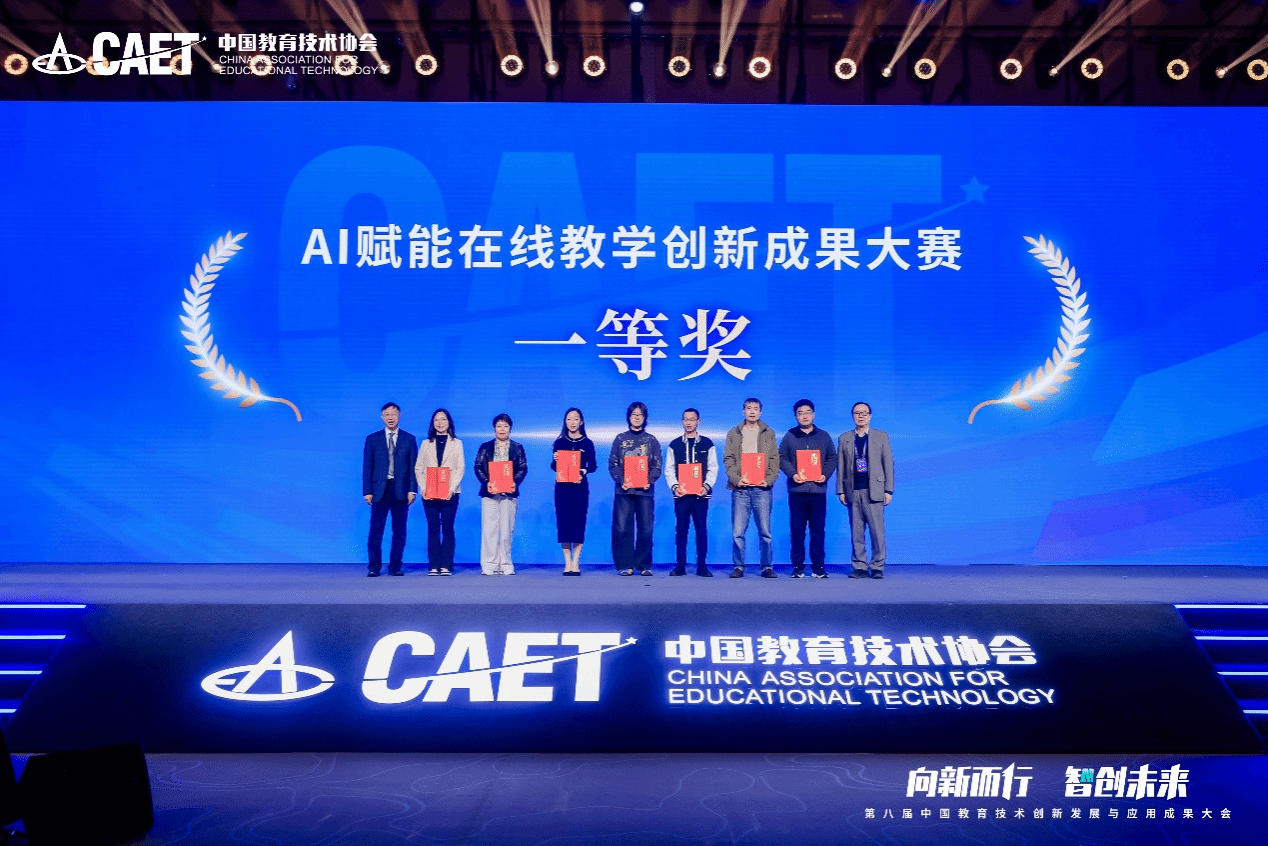
Tianjin University’s optical large-model project “Sui Ming” has won the first prize in the national “AI-Empowered Online Teaching Innovation Achievement Competition,” organized by the China Association for Educational Technology. As the only first-prize recipient from the optics field, the model was recognized for its breakthroughs in vertical large-model development and its comprehensive service system, highlighting the university’s growing strength in interdisciplinary research and industry-academia integration.
“Sui Ming,” named after the mythical figure who discovered fire, is China’s first large model dedicated to optics. It addresses the long-standing challenge of non-transparent reasoning in general-purpose AI by visualizing its logical chain and information sources, which helps resolve the “black box” effect. Its dual traceability mechanism provides both reasoning transparency and source accountability, supporting explainable optical knowledge services in classroom Q&A, literature interpretation and optical system design. The model can also auto-generate knowledge graphs and personalized learning paths to strengthen systematic understanding.
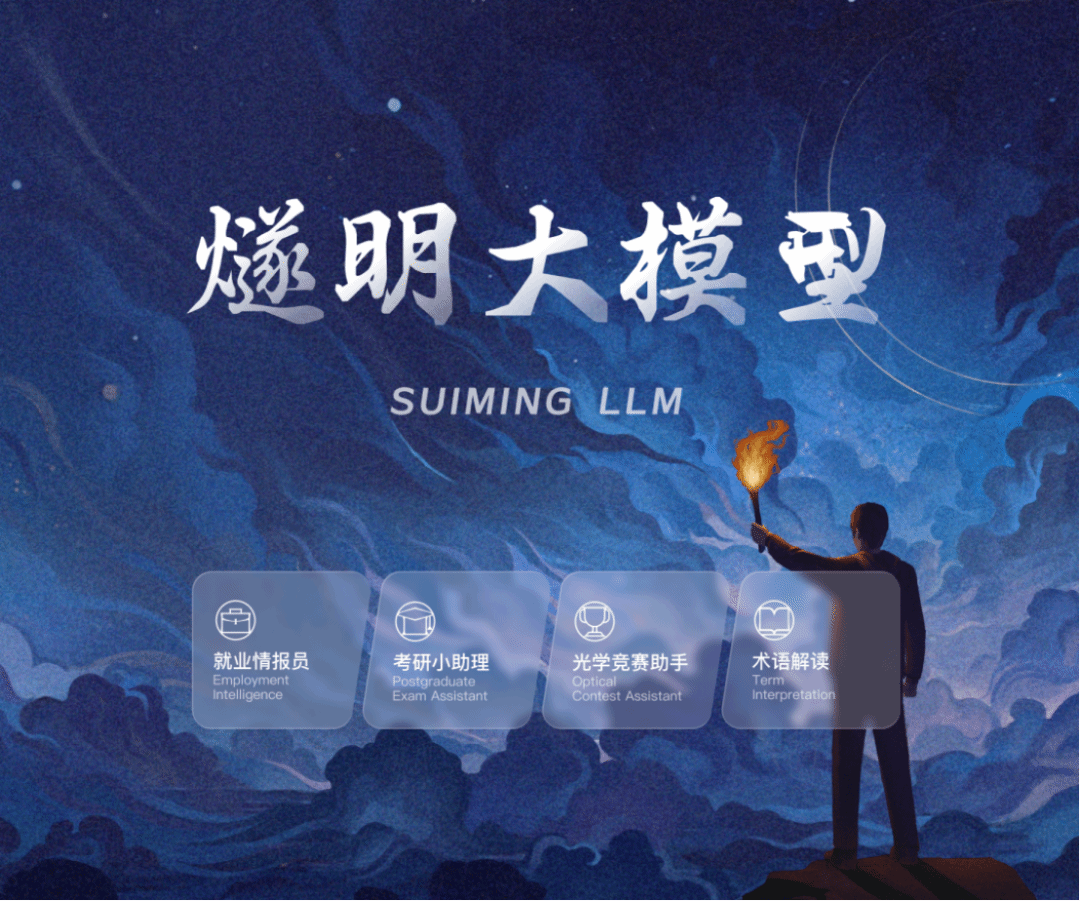
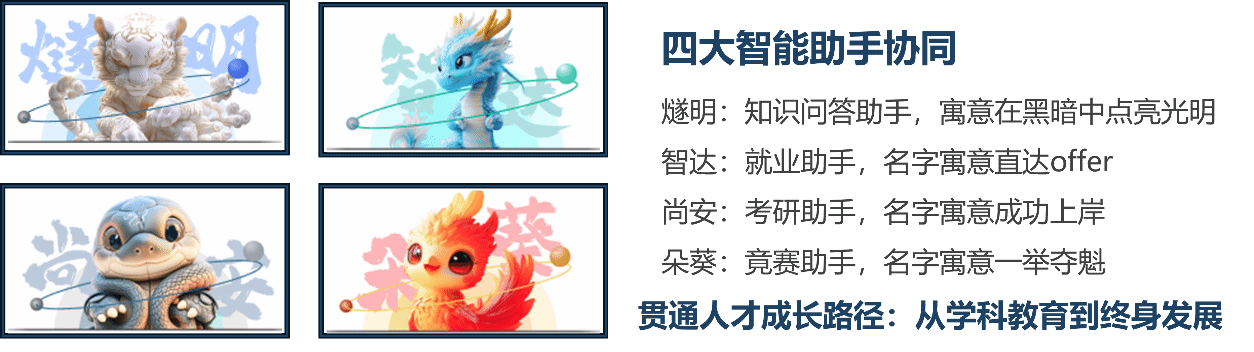
Built around four integrated AI assistants, the system offers a complete support framework for optical talent development. The “Sui Ming” Q&A assistant enables multi-turn reasoning and one-click traceability. The “Zhi Da” career assistant analyzes over half a million job postings to offer resume advice and industry insights. The “Shang An” postgraduate assistant creates individualized exam preparation plans based on university and supervisor data. The “Duo Kui” competition assistant provides guidance and templates for academic contests.
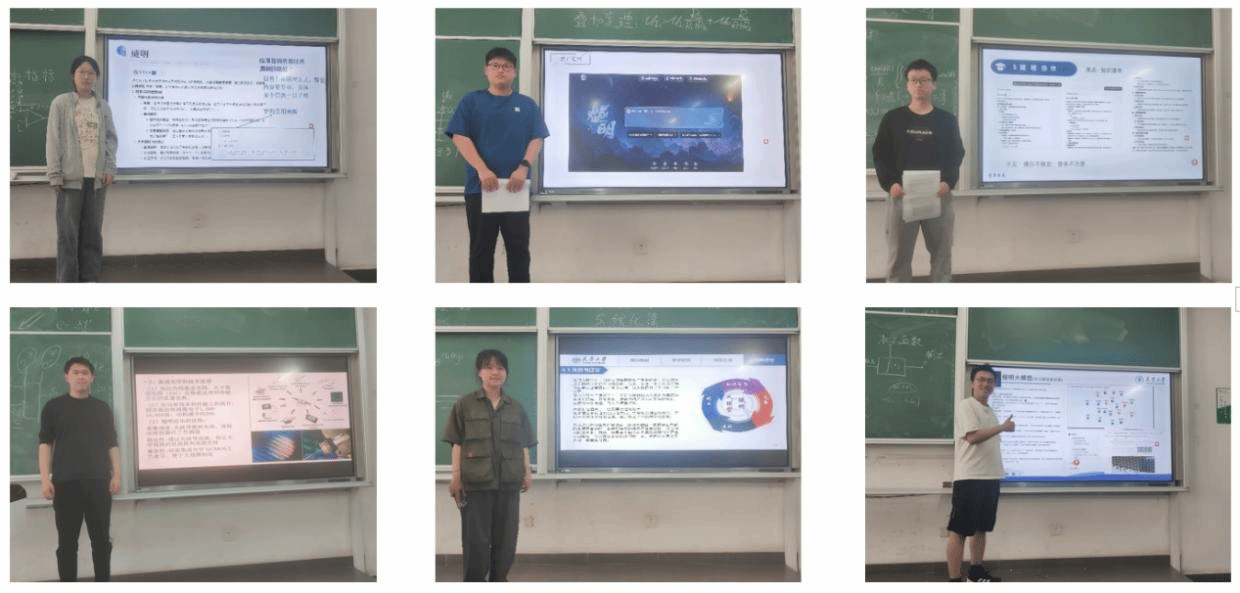
Responding to the national shortage of optical engineers, which exceeds 120,000 each year, the model has already been deployed at Tianjin University for teaching, literature analysis and experiment design. Test users have given positive feedback for its expert-level performance and its ability to reveal meaningful knowledge connections. The team has also launched the “Spark Plan” to bring AI-supported optics lessons to underserved regions and initiated a Joint Knowledge Co-construction Initiative with 20 universities including Tsinghua University and Zhejiang University to build a shared national optics knowledge graph.
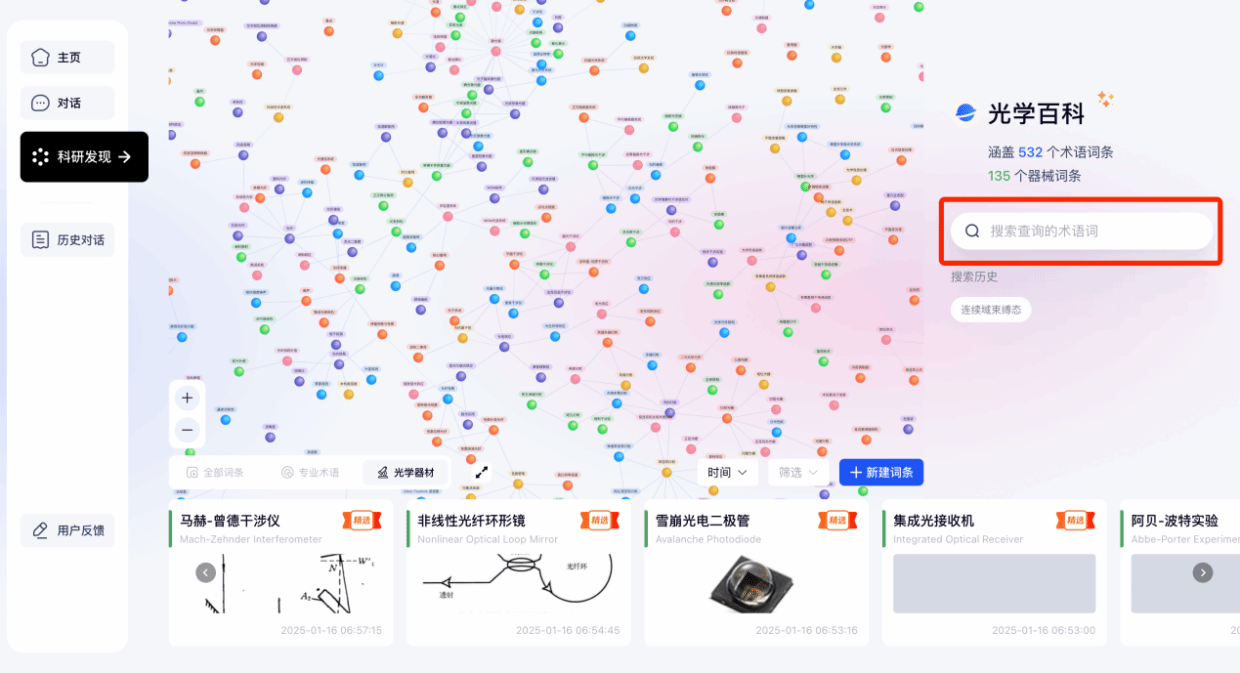
The developers are now building an AI-supported optical encyclopedia platform that has already cataloged hundreds of specialized terms and instruments. The project reflects Tianjin University’s continued commitment to integrating AI with education and contributing high-quality solutions that support the cultivation of innovative talent in the digital intelligent era.
By: Qian Yuchen
Editor: Qin Mian
Weijin Road Campus: No. 92 Weijin Road, Nankai District, Tianjin
300072
Peiyangyuan Campus: No.135 Yaguan Road, Haihe Education Park, Tianjin
300350