

Three Times as a New Student, Two Homelands, One Dream
On September 14, 2026, Mamasolieva Barno Shukhratbek Kizi (Xu Xiaohan) stood before thousands of students and faculty members at Tianjin University's freshman opening ceremony. Her palms were sweating, and her speech was crumpled in her hands. Taking a deep breath, she began in Chinese: "Today is the third time I have attended this ceremony as a freshman."

Originally from Uzbekistan, Barno joined Tianjin University as an undergraduate in 2021, returned as a master's student in 2024, and is now a doctoral student in the 2026 cohort. Though her student status has changed three times, her dream has remained the same: to become a teacher.
That dream began in childhood. She would put on her mother's high heels, hold a textbook and pretend to teach her toys. "I am your teacher!" she would announce. Years later, learning Chinese gave this childhood ambition a new direction.
At 15, inspired by her older brother, who had learned Chinese and gone to China for university, Barno began studying the language herself. His stories sparked her curiosity about China. "I want to learn Chinese, too, and I want to go to China," she told her mother. As she progressed, she came to see Chinese not simply as a language, but as a way to understand another culture and its people.
Her interest in teaching became a career ambition during her senior year of university. When a friend asked her to teach Chinese to their child, she agreed. Soon, more students joined her classes, ranging in age from seven to over 40. Many came through word of mouth. Their encouragement convinced her that teaching was something she wanted to pursue for the long term.
A volunteer teaching experience in Gansu Province gave her an even deeper appreciation of the profession. After class, children would gather around her, calling out, "Hello, Teacher!" "Their respect for teachers really touched me," she recalled. She realized that teaching is about more than sharing knowledge; it can also inspire children to explore a wider world.

Today, Barno's research focuses on Chinese language education in Uzbekistan. Her fieldwork revealed that some university teachers in her home country have to balance teaching with administrative duties, leaving limited time for professional development. She began to see these challenges as part of broader educational issues. After completing her master's degree, she chose to pursue a doctorate in Area Studies at Tianjin University to explore the subject from a wider perspective. As one of the program's first students, she says, "We learn alongside our professors."

Her learning experiences have also taken her beyond her academic field. During the summer of 2026, she joined a study program in Datong, where she learned to assemble and fly a drone for the first time. She also worked as an interpreter at an international engineering education conference, preparing for unfamiliar technical terminology through hours of study.

"That's why I love the university. It offers so many opportunities to learn and explore," she said.
Looking ahead, Barno plans to continue teaching and researching. After completing her doctorate and pursuing postdoctoral research, she hopes to return to Uzbekistan and share what she has learned in China. She wants more young people in her home country to discover China through the Chinese language, while helping more Chinese people learn about Uzbekistan.
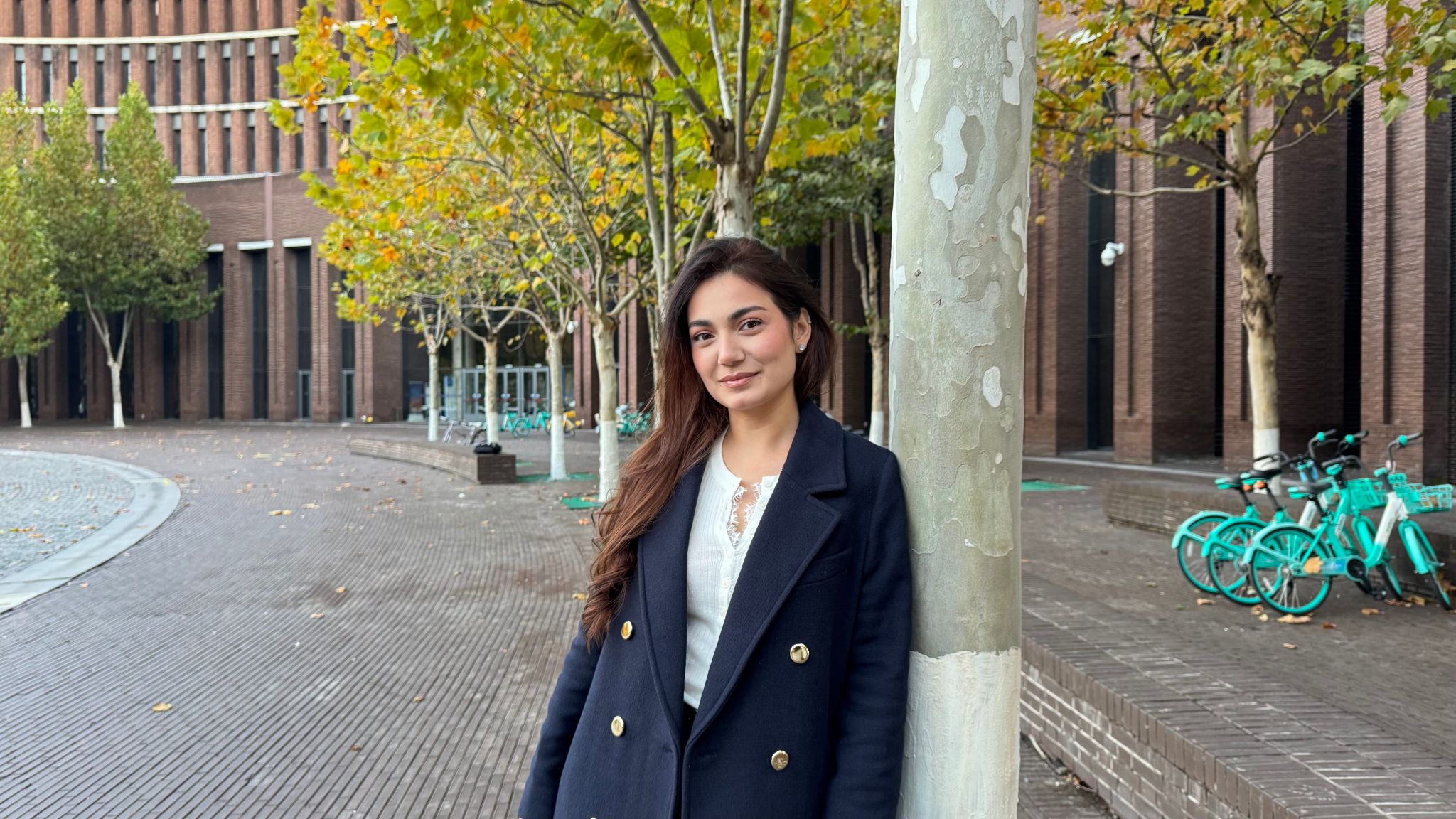
For Barno, becoming a freshman three times has never meant starting over. Each new beginning has brought her closer to her dream. The little girl who once stood in her mother's high heels, teaching her toys, is now steadily becoming the teacher she always hoped to be.
By Yu Boyang
Weijin Road Campus: No. 92 Weijin Road, Nankai District, Tianjin
300072
Peiyangyuan Campus: No.135 Yaguan Road, Haihe Education Park, Tianjin
300350