

TJU CoME 2026 "Digital Transformation" International Summer School Concluded
From July 9 to 22, the TJU CoME 2026 "Digital Transformation" International Summer School was successfully held, attracting over 20 students from multiple countries including Kazakhstan, Georgia, the United States, and Pakistan to the College of Management and Economics (CoME) of Tianjin University (TJU).

At the opening ceremony, Professor He Zhen, Dean of CoME, noted that the summer school focused on the core theme of "Digital Transformation," closely following global development trends and concentrating on frontier areas such as artificial intelligence, smart manufacturing, and data-driven decision-making. The program features a diverse range of activities including lectures by distinguished faculty, corporate visits, cultural study tours, and practical workshops. He emphasized that over the years, the CoME has been deeply committed to international educational cooperation and dedicated to cultivating innovative talents for the digital intelligence era. He expressed his hope that during the program, students from different countries would use learning as a bridge and friendship as a bond, deepening their professional knowledge and broadening their international perspectives, while striving to become ambassadors for cross-cultural exchange and building bridges of friendly cooperation between China and other nations. Subsequently, Professor He Zhen provided a detailed introduction to the history, faculty, organizational structure, disciplinary research, and talent cultivation of CoME.
Domestic and International Faculty Empowerment,
Broadening Global Management Academic Perspectives
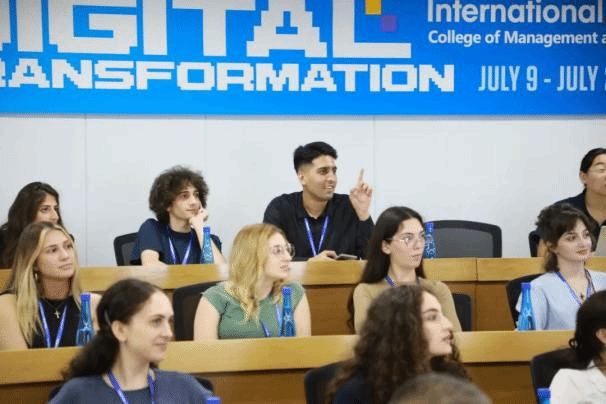
During the study period, a series of high-level courses were delivered. Professor He Zhen first delivered a keynote report titled "Opportunities and Challenges of Quality Management in the AI Era."
Ni Wei, Chairman of Chelian Zhihui (Beijing) Technology Development Co., Ltd., gave a lecture on "Development of Automotive Intelligence in China." James O'Neill, Managing Partner and Chief Operating Officer of JFP Holdings and a member of the International Advisory Board of Management and Economics at Tianjin University, gave a lecture titled "The Digital Economy: Evolution, M&A-Driven Transformation, and Future Prospects in the United States, Europe, and China." Tang Yinshan, Associate Dean of Henley Business School at the University of Reading, presented a report on "From Intuition to Algorithms: Rethinking Management Principles under AI Influence." Assistant Professor Sun Shujing from the University of Texas at Dallas delivered an online lecture titled "Beyond Algorithmic Accuracy: Social Influence and the Expertise Paradox in Healthcare Decision-making." Cui Runbang, CEO of Beijing Fantaike Technology Co., Ltd., gave a lecture on "GenAI and AI Agents: Implementation and Practices in Chinese Enterprises.
Additionally, Professor Ali Kharrazi from the School of Public Administration, Professor Fang Kan and Associate Professor Zhao Xiujie from the Department of Industrial Engineering, Associate Researcher Sun Peng and Lecturer Jia Qian from the Department of Information Management and Management Science, Lecturer Zhang Xiaoxi from the Department of Marketing, and Lecturer Yang Geyu from the Ma Yinchu School of Economics all delivered lectures on the theme of "Digital Transformation."
Furthermore, CoME invited Professor Li Xiaomei from the Department of Organization and Strategic Management to lead an engaging and educational LEGO workshop, offering students a hands-on, experiential learning session. Associate Professor Wang Peng from the Department of Marketing and Lecturer Xia Shiyun from the Ma Yinchu School of Economics also delivered courses on digital transformation. Liu Yuanrui, a 2025 master's student, shared his experience from international forums.
From cutting-edge academic theories to frontline industrial practices, from Chinese local case studies to the global economic landscape, the rich and well-structured courses were progressive and complementary. The two-week immersive, all-English classroom experience built a knowledge framework in digital management for international participants, bridging China and the world. It allowed students to genuinely experience China's digital transformation practices and frontier explorations, inspiring academic thinking and broadening research horizons through cross-cultural learning, while laying a solid professional theoretical foundation for subsequent industry visits and cultural study tours.
Deep Integration of Industry, Academia, and Research:
Exploring China's Digital Transformation Practices
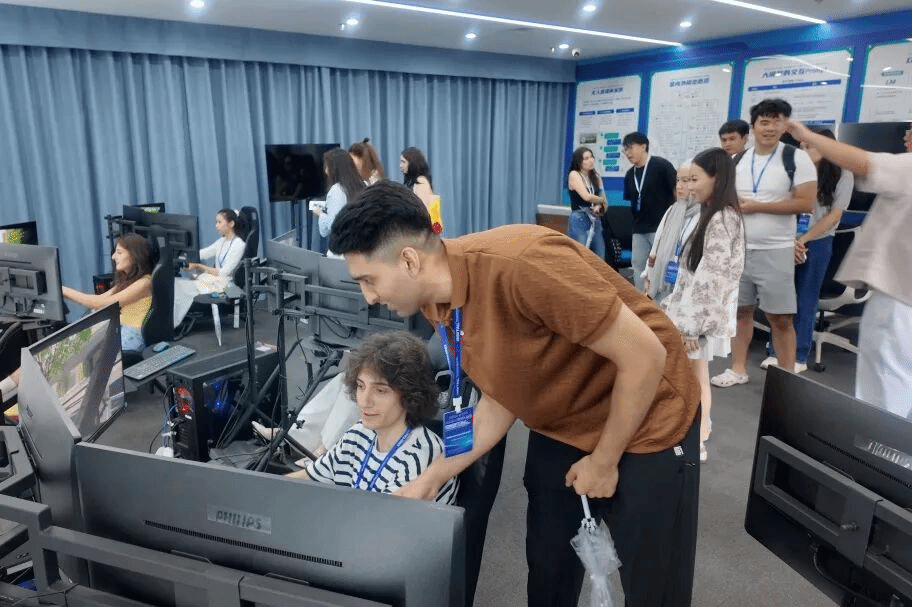
The summer school organized visits for international participants to benchmark technology companies and the CoME's research platforms, providing firsthand exposure to China's digital transformation achievements and the cutting-edge research capabilities of CoME.

During the corporate visit, participants toured the Lenovo (Tianjin) Smart Innovation Service Industrial Park, visiting Lenovo's office buildings and Future Center. The guide provided comprehensive explanations throughout the tour, systematically introducing Lenovo's globalization strategy, digital operations system, and smart manufacturing business units. This offered international students a direct view of domestic technology enterprises' digital upgrade pathways, industrial innovation models, and long-term development strategies, allowing them to experience the landscape of China's digital industry development.During the visit to the Complex Systems Management Laboratory, a series of intelligent research experiment platforms and various research facilities integrating big data, intelligent decision-making, and digital simulation technologies demonstrated to the participants the CoME's comprehensive research hardware support and high-level research systems in the fields of digital management and intelligent optimization.
Cultural Exploration of the Twin Cities of Beijing and Tianjin:
Fostering Mutual Understanding among Chinese and International Youth
To provide international participants with a multidimensional understanding of China's historical heritage and urban development landscape, the summer school arranged cultural study tours to both Tianjin and Beijing, deeply integrating cultural experiences with academic exchange.
In Tianjin, participants visited the Wudadao (Five Great Avenues) cultural district, strolling through streets lined with century-old western-style buildings and experiencing the urban imprint of modern Sino-Western integration, gaining a tangible sense of Tianjin's unique historical character as a modern treaty port. At the Tianjin Museum, they traced the thousand-year development trajectory of the Tianjin region through cultural relics, from ancient water transport civilization to modern industrial development, comprehensively experiencing the inclusive urban charm of this Bohai coastal city. During the Beijing study tour, faculty members led participants to visit core cultural landmarks including the Forbidden City, Shichahai, and Qianmen, allowing them to appreciate the grandeur of classical Chinese architecture and the depth of millennia of civilization. Strolling along the Shichahai lakeside and Qianmen old street, they witnessed the interplay of vibrant local life and ancient capital charm, experiencing both the profound heritage of five thousand years of Chinese civilization and the lively atmosphere of contemporary China.
Through walking-based experiential activities, the program built bridges for civilizational dialogue, enabling international youth to experience a real, multidimensional, and vibrant China. Through on-site explorations, cultural understanding was enhanced, promoting mutual empathy and cross-cultural learning between Chinese and international youth.
Concluding the Midsummer Study Program:
Teacher-Student Dialogue Fostering Consensus on Development
As time passed and the program drew to a close, the fourteen-day Digital Transformation International Summer School celebrated its successful conclusion. Vice Dean Jia Ning extended sincere congratulations to all participants for successfully completing the entire study program and presented each participant with a certificate of completion. During a dialogue forum, moderated by Jia Ning, faculty members Sun Peng from the Department of Information Management and Management Science and Ma Pei from the Department of Engineering Management engaged in exchanges with international students on the frontier topic "Could AI take over the rest of work (human performs) in the next 10-20 years?" Teachers and students freely exchanged views, sparking diverse ideas through cross-cultural dialogue.
This international summer school, with an entirely overseas student body, represents an innovative practice by the College of Management and Economics in advancing high-level opening-up in education and deepening international education locally. Leveraging the College's strong interdisciplinary faculty and cutting-edge digital business curriculum resources, and integrating diverse formats including classroom instruction, industry visits, and twin-city cultural study tours, the program provided a quality platform for global youth to understand China's digital economy and engage in dialogue with Chinese management practices.
A Letter Across the Asian Continent
After the Summer School, CoME received a letter of appreciation from Ivane Javakhishvili Tbilisi State University (TSU) in Georgia. Following the successful conclusion of the TJU CoME 2026 "Digital Transformation" International Summer School, this letter from Georgia extended the warmth and sincerity of the summer transnational study tour.
Dr. Erekle Astakhishvili, Vice Rector of Tbilisi State University, sent a letter to Professor He Zhen, Dean of CoME, expressing sincere gratitude to Tianjin University for meticulously organizing the Digital Transformation International Summer Camp and for its warm hospitality extended to TSU students. The letter noted that the summer school provided students with a rich and beneficial learning experience, helping them expand their professional knowledge, enhance their comprehensive abilities, and gain valuable international exchange experience.
The letter specifically highlighted that the summer school built a platform for cross-cultural dialogue and friendship among young students from different countries. Students from Georgia, the United States, Kazakhstan, Pakistan, and other nations gathered at Tianjin University, deepening their understanding of diverse cultures, traditions, and perspectives through exchange and collaboration. TSU indicated that participating students would share the knowledge, experience, and inspiration they gained at Tianjin University with their peers on campus in the new academic year, further extending the positive impact of the program.
This letter of appreciation embodies the collective recognition from partner universities of the program's organization, curriculum design, cultural experiences, and educational outcomes. It also serves as a testament to the CoME's sustained efforts in expanding international cooperation and serving the growth of global youth.
By College of Management and Economics
Editor: Sun Xiaofang
Weijin Road Campus: No. 92 Weijin Road, Nankai District, Tianjin
300072
Peiyangyuan Campus: No.135 Yaguan Road, Haihe Education Park, Tianjin
300350