

National Alliance for Brain-Computer Interface Education Established
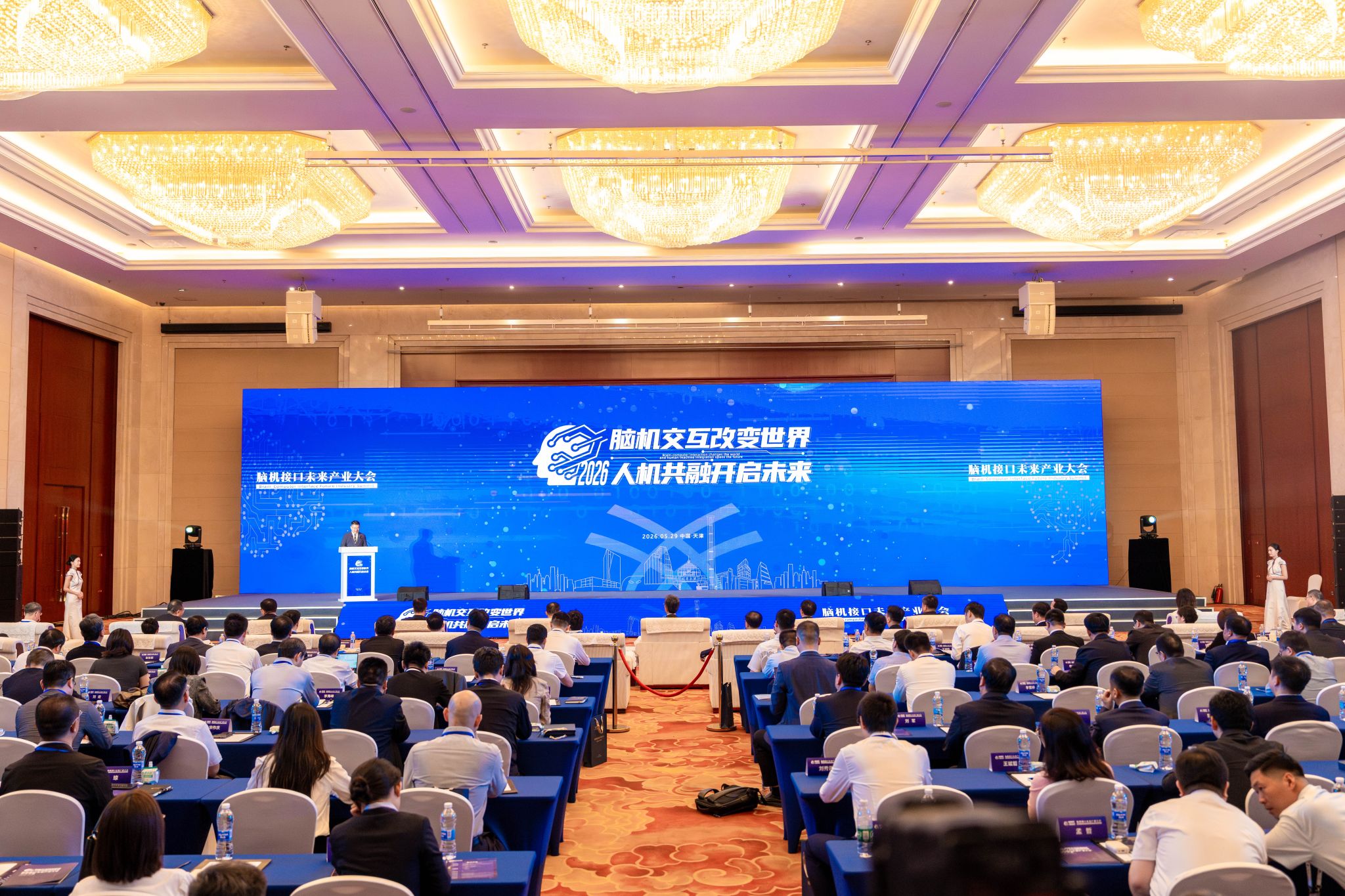
On May 29, the First National Conference on the Future Industry of Brain-Computer Interfaces (BCIs), a key parallel event of the 2026 World Intelligence Expo, was held in Tianjin. Held under the theme "Brain-Computer Interaction Changes the World, Human-Machine Integration Shapes the Future," the conference focused on cutting-edge technological innovation, industrial ecosystem development, talent cultivation, and the translation of clinical achievements in the BCI field.
More than 200 participants, including academicians from the Chinese Academy of Sciences and the Chinese Academy of Engineering, government officials, representatives from leading universities and research institutes, and industry leaders, gathered to explore new pathways for the integration of medicine and engineering and to chart the future development of China's brain-computer interface industry.
During the conference, the National Alliance for Brain-Computer Interface Education, initiated by Tianjin University, was officially established. Fourteen universities signed the founding agreement, including The Hong Kong Polytechnic University, Zhejiang University, the University of Science and Technology of China, Harbin Institute of Technology, Beihang University, Beijing Institute of Technology, Southeast University, South China University of Technology, University of Electronic Science and Technology of China, Southern University of Science and Technology, ShanghaiTech University, Hainan University, and Shandong First Medical University. The alliance aims to strengthen collaboration in cultivating talent for emerging industries and to advance the development of high-level professionals in the BCI field.
As one of the future industries prioritized under China's national development strategy, brain-computer interface technology demonstrates significant potential across a wide range of sectors, including healthcare, education, manufacturing, everyday life, and aerospace. The rapid growth of the industry has created an increasingly urgent demand for interdisciplinary, highly skilled innovators. Meeting this demand requires the establishment of a talent development ecosystem that can support the industry's long-term advancement.
To address the shortage of highly skilled professionals and support national strategic needs, Tianjin University has taken the lead in developing academic programs dedicated to brain-computer interfaces. By integrating the strengths of both engineering and medical education, the university aims to cultivate future leaders capable of driving innovation in intelligent human-machine interaction.
In 2024, Tianjin University launched the nation's first undergraduate concentration in brain-computer interfaces, offered through its School of Future Technology and School of Medicine. In 2025, the university established China's first doctoral program in brain-computer interfaces as an interdisciplinary first-level discipline, creating a comprehensive talent development pathway spanning undergraduate, master's, and doctoral education.
In April 2026, the Ministry of Education officially approved the establishment of the undergraduate major Brain-Computer Science and Technology, which falls under the interdisciplinary studies category. The program became the first undergraduate major in China specifically dedicated to brain-computer interface education and open to direct student enrollment.
The establishment of the National Alliance for Brain-Computer Interface Education represents a concrete step toward advancing the coordinated development of education, science and technology, and talent cultivation in alignment with national strategic priorities. By integrating leading educational resources across the country, the alliance will promote a new collaborative model that brings together academia, industry, research, and application. Through deeper industry-education integration, it aims to strengthen China's strategic talent pool in the BCI field and provide sustained support for the high-quality development of future industries.
By: Yu Boyang
Weijin Road Campus: No. 92 Weijin Road, Nankai District, Tianjin
300072
Peiyangyuan Campus: No.135 Yaguan Road, Haihe Education Park, Tianjin
300350