

From Laboratories to Rural Classrooms - Two Pakistani Doctoral Students’ China Story
When Alam, a Pakistani doctoral student at Tianjin University, first arrived at Nanyang Middle School in Tanchang County, Longnan City, Gansu Province, he noticed that the students in the classroom were both curious about their teachers from another country and somewhat shy.
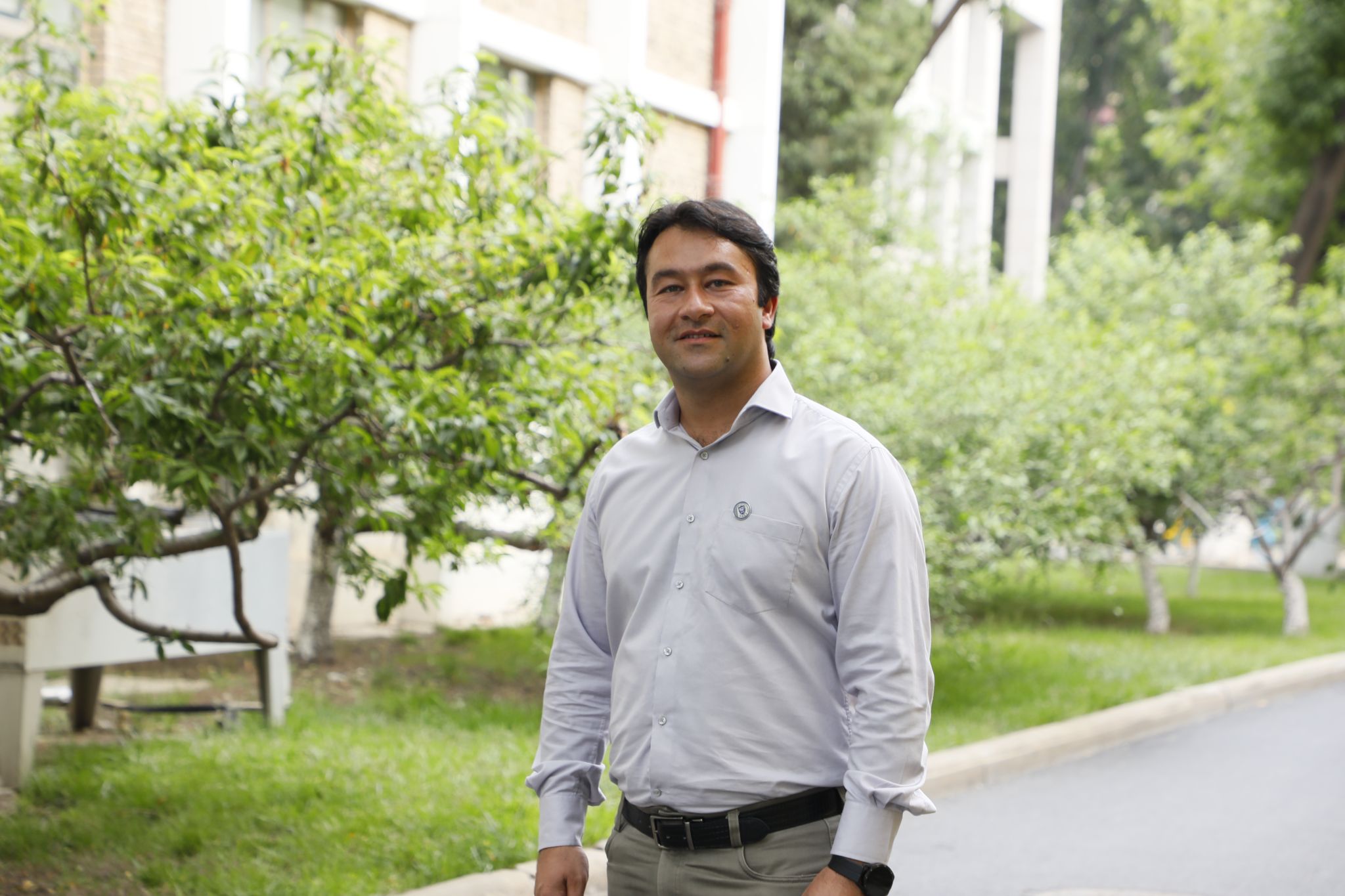
The initial distance was soon bridged through interactive teaching. Alam and his peers guided the students to express themselves in English through games, group competitions and classroom exchanges, creating a relaxed and engaging atmosphere. As the classes progressed, more students began raising their hands to participate, and English speech activities drew wider interest. One ninth-grade student even contacted Alam via WeChat after class, hoping to continue practicing English.
“When I saw students who were initially shy later standing confidently on the stage, I was deeply touched,” Alam said. “Education is not only about passing on textbook knowledge, but also about helping young people broaden their horizons and look toward the future.”
In November 2025, two Pakistani doctoral students at Tianjin University, Alam, who majors in electrical engineering, and Nayab, who majors in biomedical engineering, traveled to Nanyang Middle School in Tanchang County as international student volunteers for a weeklong English teaching program. They taught more than 200 students from Grades 7 to 9. For them, the exchange across mountains and distance was not only a classroom teaching experience, but also an important window into understanding China and reflecting on their own sense of responsibility.
Alam comes from Swat, a mountainous and scenic region in northern Pakistan known as the “Switzerland of Asia.” He is now pursuing a doctoral degree in electrical engineering at the School of Electrical and Information Engineering of Tianjin University, with research interests related to high-speed motors and electrical system design.
Choosing China was not a coincidence for Alam. He had applied to several Chinese universities before finally choosing Tianjin University, where the research environment, faculty team and academic platform left a strong impression on him. He was particularly interested in his supervisor’s research on high-speed motor design and hoped to further improve his professional skills in China’s research environment.
“I chose Tianjin University because it has a very good research environment and excellent professors,” Alam said. Since arriving in China, he said, he has been learning every day in a new environment. “I have met different professors and scientists, and I have learned many new skills and gained new knowledge.”
After coming to China, Alam has broadened his horizons not only in the laboratory but also through practical experience. He has attended international energy-related exhibitions to learn about the latest developments in solar energy and energy storage technologies. He also worked as an electrical engineering intern at a ship design company in Tianjin, where he participated in work related to electrical systems and marine engineering projects.
“A ship contains complex electrical systems, including power generation, emergency systems, navigation and lighting, all of which are related to my major,” Alam said. He noted that the ongoing electrification and intelligent development of ships have created new application scenarios for related research, while his own work focuses on high-speed motor control systems. In the future, he hopes to apply the technologies and experience he has gained in China to electric ships and related engineering practices.
“I hope to become a bridge between China and Pakistan,” he said. “I want to bring back to Pakistan the knowledge, technologies and cultural understanding I have gained in China, and also convey the expectations of Pakistani youth for friendship and cooperation.”
Unlike Alam, Nayab’s China story extends from education to scientific research. Before coming to Tianjin University, she worked in Pakistan’s government education sector and served as a middle school principal for five years. She is now a doctoral student in biomedical engineering at the Tianjin University Medical School.
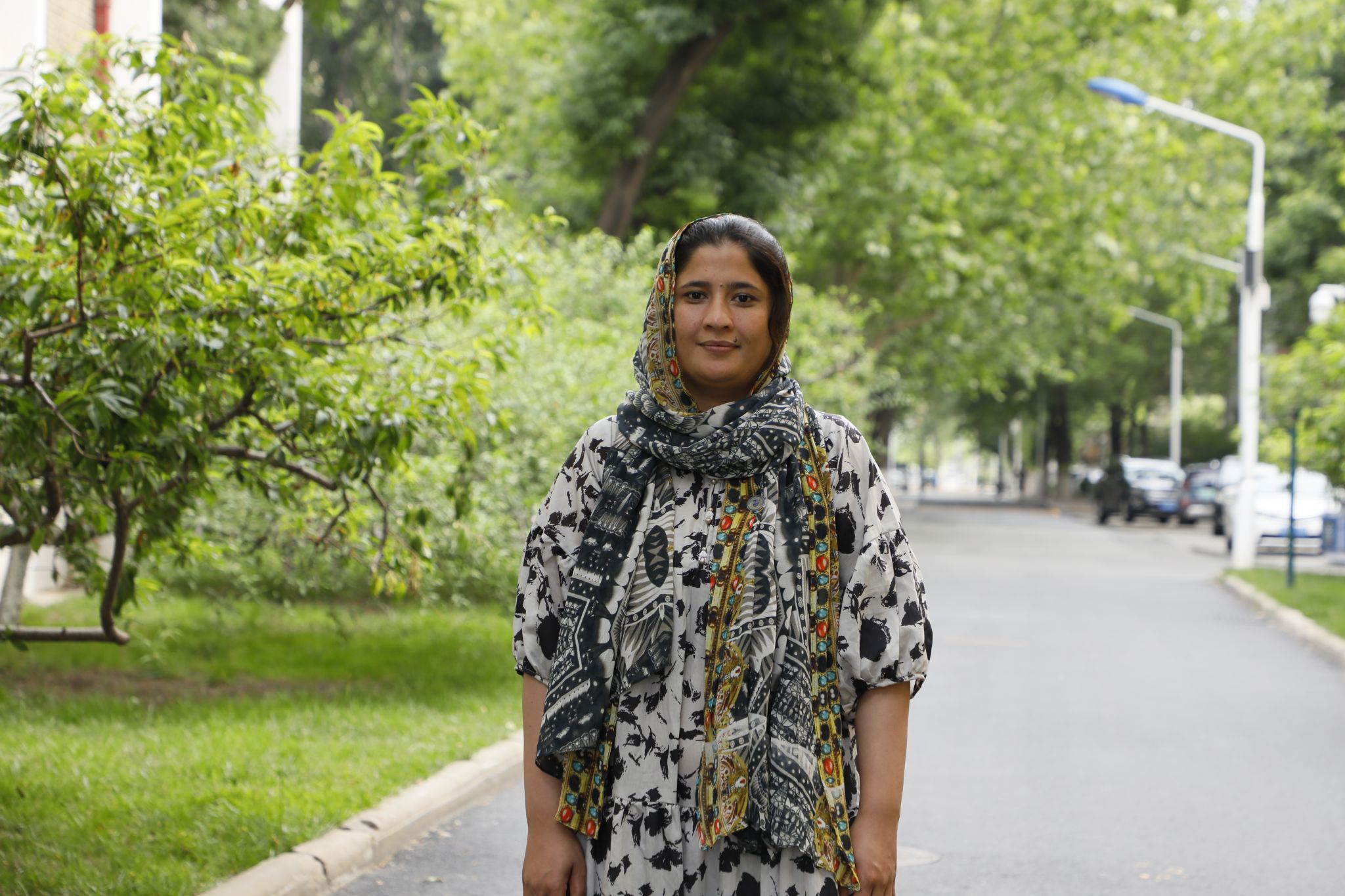
“Studying in China is, for me, both an academic pursuit and a process of broadening my vision and improving myself,” Nayab said. The experimental facilities, research atmosphere and academic traditions of Chinese universities have helped her make significant progress in laboratory skills, academic writing and scholarly communication.
The teaching program in Tanchang also gave Nayab a closer look at daily life in China’s basic education system. As an international student who had long been engaged in middle school education, she paid particular attention to classroom organization, students’ learning attitudes and teaching methods. The students’ concentration in class, active participation in activities and orderly campus life at Nanyang Middle School gave her a more direct understanding of China’s basic education. “This also helped me better understand why China attaches such great importance to education,” Nayab said.
In class, Nayab tried to connect English learning with familiar topics such as local food, landmarks and customs, encouraging students to practice expression by introducing their own lives and hometowns. “The students were very interested in my cultural background, university life and traditional Pakistani food. Their cross-cultural curiosity deeply moved me,” Nayab said. “I thought I had come to open a window for them, but they also opened a window for me.”
Both Alam and Nayab said that before coming to China, their understanding of the country came mostly from books, the internet and news reports. After they arrived, however, details from everyday life continued to enrich their perception of China.
Alam recalled that when he first arrived in China, he sometimes encountered inconvenience due to language barriers. Yet people around him would always help through gestures, mobile translation apps or patient guidance. “At that time, I realized that even when people do not speak the same language, they are still willing to help patiently,” he said. China’s infrastructure, technological development, safe environment and rich cultural heritage have all given him a more direct understanding of the country.
Nayab has also experienced the many dimensions of China’s development in laboratories, classrooms and urban life. Research training has shown her China’s emphasis on innovation, while the teaching program enabled her to feel the solid foundation of grassroots education. Playing badminton with friends on weekends, tasting Chinese food and exploring the city have also helped her integrate more naturally into everyday life here.
“I have seen a China that is resilient, hardworking, culturally rich and full of warmth,” Nayab said.
Looking ahead, the two students have different plans but share similar aspirations. Nayab plans to return to Pakistan after graduation and continue working in education. She said she will bring back the research methods, teaching experience and cross-cultural understanding she has gained in China and share them with more students.
“As a teacher, I will bring the experience I have gained in China back to my homeland,” Nayab said. “I will teach my students what I have learned here, and I also hope they can come to understand a broader world.”
Alam hopes to continue accumulating professional experience in China before applying his knowledge of high-speed motors, electrical system design and marine engineering to related industries in Pakistan. He said Pakistan’s industrial development also needs more professionals, and the knowledge and practical experience he has gained in China may play a role in the future.
These aspirations are closely connected with an earlier experience. On Aug. 31, 2025, Pakistani Prime Minister Shehbaz Sharif visited Tianjin University and delivered a speech, encouraging Pakistani students studying at the university to work hard to acquire the latest knowledge and technologies, serve the welfare, progress and prosperity of the Pakistani people with their expertise, and become “torchbearers of China-Pakistan friendship.”
His words greatly inspired Alam and Nayab. Later, at the important moment marking the 75th anniversary of the establishment of diplomatic relations between China and Pakistan, they joined their Pakistani peers in writing a letter to Chinese President Xi Jinping, reporting on their studies and practical experiences in China and expressing the heartfelt wish of young Pakistanis to become builders of China-Pakistan cooperation, communicators of mutual understanding and guardians of friendship.
After receiving President Xi’s warm reply, both students felt encouraged and deeply inspired. Alam said the reply further strengthened his belief in continuing to study professional knowledge, actively participating in educational practice and promoting friendship between China and Pakistan.
“Prime Minister Shehbaz encouraged us to become ‘torchbearers of China-Pakistan friendship,’ and President Xi’s reply further strengthened this belief,” Alam said.
Nayab said the reply was not only an affirmation of their previous efforts, but also a responsibility for the future.
“I will cherish my study opportunities at Tianjin University even more and continue improving my abilities,” she said. “No matter where I am in the future, I will always remain a firm guardian and active communicator of China-Pakistan friendship.”
From laboratories at Tianjin University to classrooms on a campus in Gansu, from academic study to cross-cultural exchange, the China stories of the two Pakistani youths are still unfolding. For them, China is not only a place of study, but also a new starting point for understanding the world, recognizing responsibility and building friendship.
By: Qin Mian
Weijin Road Campus: No. 92 Weijin Road, Nankai District, Tianjin
300072
Peiyangyuan Campus: No.135 Yaguan Road, Haihe Education Park, Tianjin
300350