

Tianjin University Experiment Launches into Space for “Break-In” Tests in Orbit
At around 8:00 a.m. on May 11, a Long March 7 Y11 carrier rocket carrying the Tianzhou-10 cargo spacecraft was successfully launched. Onboard Tianzhou-10, an experimental apparatus for the project “Space Dust Protection and Removal, and Material Wear Resistance and Self-Repair Technology Experiment”—led by Professor Cui Yuhong from the Space Mechanics Team at Tianjin University's School of Mechanical Engineering—also embarked on its journey into space to conduct in-orbit technology tests. The experiment aims to break through technical bottlenecks in material wear resistance, protection, and self-repair under extreme environments, providing technical support for China's future lunar, Martian, and other deep-space exploration missions.
After arriving in space, the experimental apparatus will be precisely placed onto an experimental workstation on the space station by the station's robotic arm, where it will undergo one year of in-orbit testing. Once the in-orbit experiments are completed, astronauts will transfer the wear-resistant components from the apparatus into the station's interior, and they will return to Earth aboard a Shenzhou crewed spacecraft for further analysis and research.
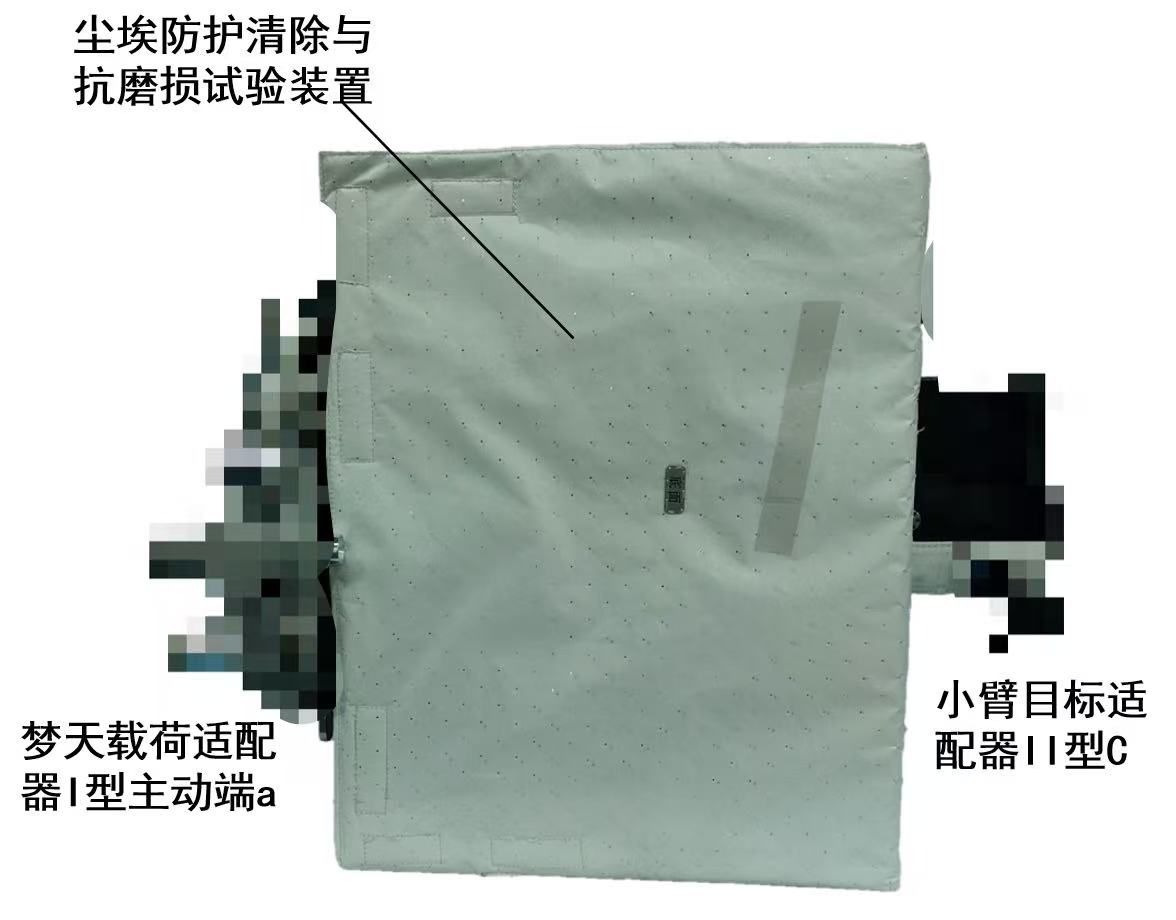
The experiment focuses on three major scientific objectives: verification of space dust protection and removal, testing of space material wear resistance, and verification of space material self-repair.
In the space dust protection and removal verification, scientists will apply specific electric fields to test specimens to drive the internal dust to move in a regular pattern. A high-resolution camera will record the movement process in real time, and digital image processing technology will be used for on-orbit image analysis to obtain dust removal rate data, providing an important reference for the future development of electric curtain dust removal devices.
The space material wear resistance test will expose space materials to the real space environment. After the test specimens return to Earth, mechanical and optical tests will be conducted to obtain performance characteristics, which will then be further compared with a control group to gain in-depth insights into the characteristics of the space environment and material lifespan.
In the space material self-repair verification, scientists will use a linear motor to puncture a test specimen and observe the self-healing process at the puncture site in real time under the effects of space environmental factors such as ultraviolet radiation. The equipment will capture images and analyze them to obtain key influencing factors and scientific data during the repair process.
Prior to launch, the experimental apparatus and specimens had successfully completed nearly one year of rigorous environmental tests on the ground, along with a series of ground verifications including ergonomics and space station compatibility evaluations.
“Conducting in-orbit experiments for this project will systematically elucidate the core mechanisms of photosensitive, rigid, and flexible materials in complex and extreme environments, breaking through key bottlenecks that constrain space missions. It will establish a solid technological application foundation for deep-space exploration missions to the Moon, Mars, and asteroids. The results will help drive the transformation of spacecraft protection systems from 'passive defense' to 'active regeneration,' enhancing the in-orbit service life and operational reliability of critical payloads. Meanwhile, the cutting-edge theoretical breakthroughs achieved will have broad application potential in precision instruments, flexible electronics, and other industries related to the deep-space economy,” said Professor Cui Yuhong.
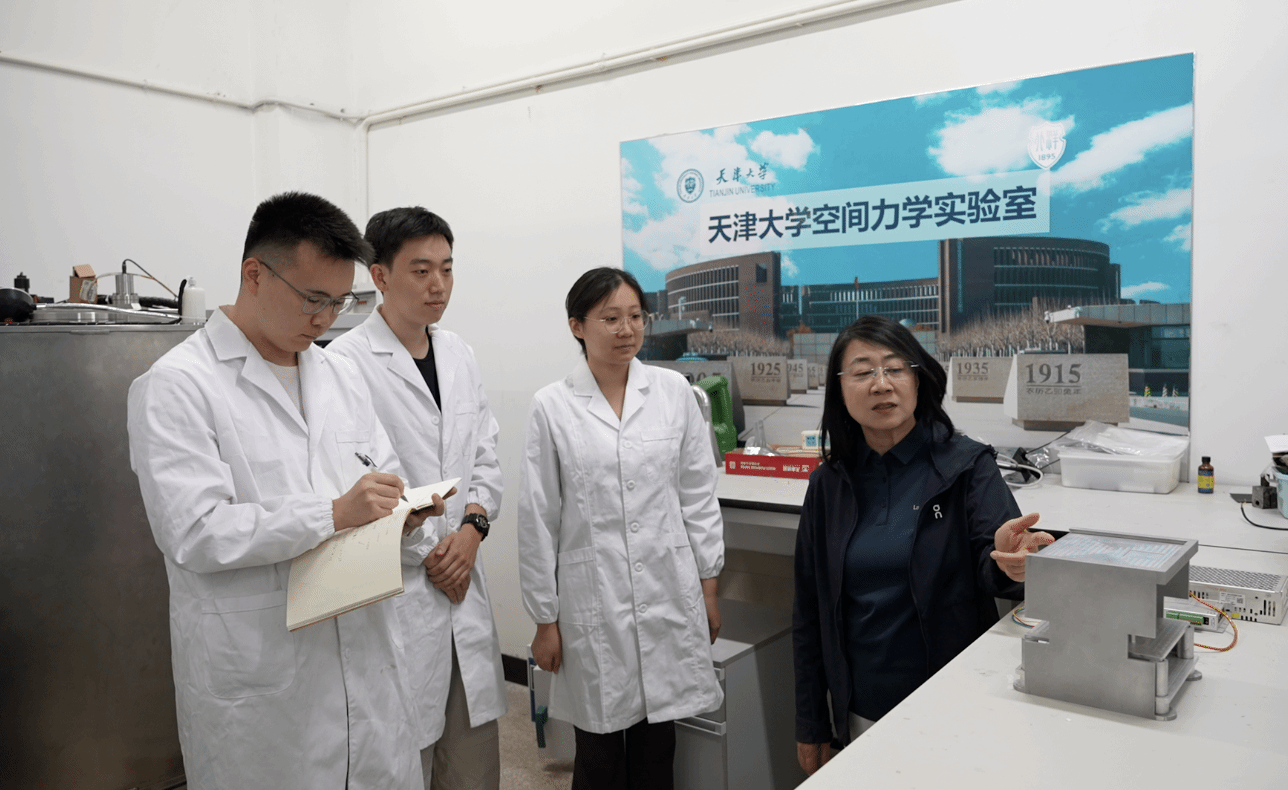
The project is led by Tianjin University, in collaboration with Beijing Institute of Space Mechanics and Electricity (BISME) and Astronaut Center of China (ACC).
The project embodies more than two decades of accumulated expertise in the aerospace field from Tianjin University's Space Mechanics Team. The team is dedicated to tackling key mechanical challenges in aerospace engineering and has been deeply involved in major national science and technology missions such as China's lunar exploration program and Mars exploration. It has successfully conducted ground environmental simulation experiments for multiple landers—including those for Chang'e-3, Chang'e-5, Tianwen-1, and the Return Capsule-7—covering over a hundred working conditions, thereby providing critical research methods and data support for China's lunar exploration program.
By: Yu Boyang
Weijin Road Campus: No. 92 Weijin Road, Nankai District, Tianjin
300072
Peiyangyuan Campus: No.135 Yaguan Road, Haihe Education Park, Tianjin
300350