

Tianjin University Youth Root Themselves in Vivid Practice
In February 2026, Tianjin University's "Silk Road Navigation" practice team set off once again. Following previous research visits to countries such as Singapore, Indonesia, Malaysia, the United Arab Emirates, and the Kingdom of Saudi Arabia, the team went deep into cities such as Hanoi, Ho Chi Minh in Vietnam.
In collaboration with the Tianjin Construction Industry Association, they visited overseas construction projects of Chinese enterprises including China Construction Second Engineering Bureau and China Construction Third Engineering Bureau. Through field research, interviews, and exchanges, they experienced the international responsibility of Chinese enterprises up close, focused on cutting-edge developments in the international engineering industry, told Silk Road stories, and contributed youthful wisdom.
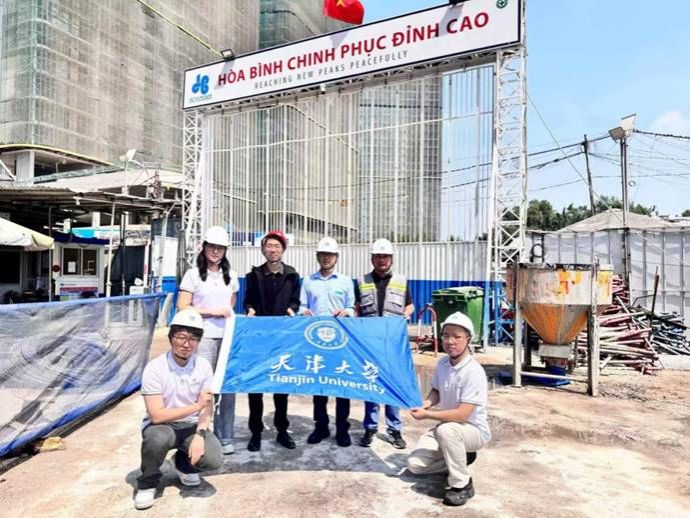
Crossing Standard Barriers, Demonstrating Construction Resilience
On February 1, the practice team visited the construction site of the China Construction Third Engineering Bureau GEL O&J Automobile Manufacturing Factory project for research and held discussion exchanges.
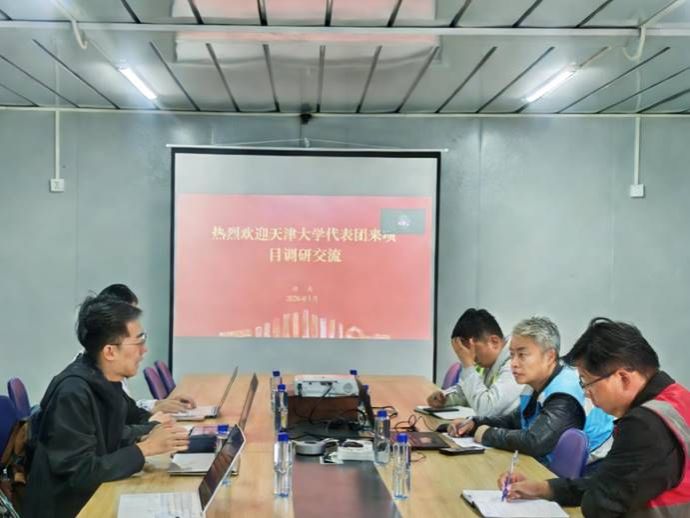
During the discussion, project representatives detailed the operational mechanisms of the consortium management model. Practice team members learned that the project department had faced multiple practical challenges, including tight delivery schedules, concentrated worker returns home during the Vietnamese Spring Festival, and the need to enhance local recognition and acceptance of Chinese construction standards. Facing these difficulties, the Chinese construction management team adhered to systematic policy implementation and targeted efforts, innovatively implementing a layered and categorized management model. Through measures such as aligning Chinese and Vietnamese technical standards, exchanging management experience, and integrating construction techniques, they fully demonstrated the comprehensive advantages of Chinese construction in efficiency, quality, and management through tangible results, effectively ensuring the project's stable, orderly, and efficient progress.

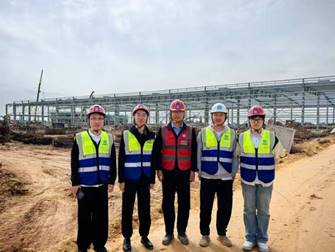
During in-depth exchanges, both sides engaged in thorough discussions on key issues such as standard mutual recognition and technology export in international engineering cooperation. Drawing on frontline experience, the project leader shared practical insights into systematically cultivating backbone talent combining engineering expertise with cross-cultural competencies—effectively overcoming language barriers, bridging technical knowledge gaps, and driving standards implementation—while strictly adhering to local policies on expatriate workforce ratios.
Practice team leader Liu Yuanrui stated: "From the construction site to corporate discussions, I truly witnessed the development capabilities and resilience of Chinese construction enterprises in overseas markets and deeply felt the professionalism demonstrated by Chinese enterprises abroad. Facing complex legal environments and cultural differences, they achieved cost reduction and efficiency improvement through management innovation. This research has also strengthened my determination to apply what I learn in service of global needs."
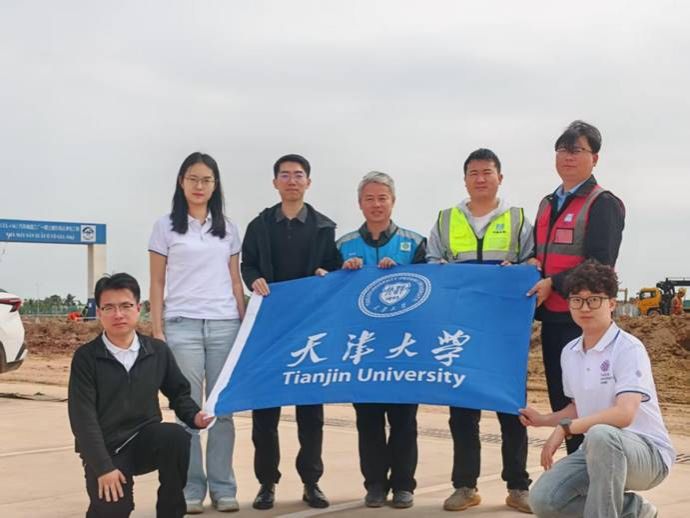
Deep Local Roots, Seeking New Chapters in Green Building M&E
On February 4, the practice team arrived at the designated subcontracting M&E project for Phase I of the Eaton Park project undertaken by China Construction Second Engineering Bureau for research. They went to the frontline to inspect key M&E construction processes and exchanged practical experiences with the project team regarding overseas M&E engineering technology application, construction management and control, and local collaboration, accumulating vivid practical experience in international M&E engineering construction and gaining direct insight into the construction strength and professional control capabilities of Chinese enterprises in the overseas M&E field.
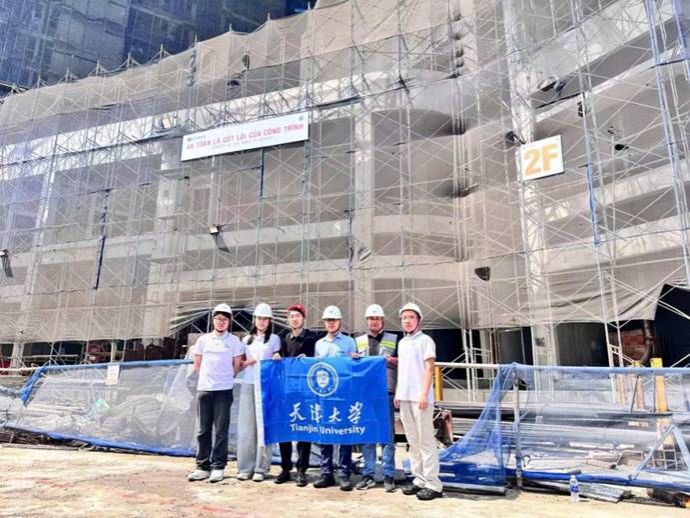
Subsequently, the practice team arrived at the Vietnam H14-3 project site of China Construction Second Engineering Bureau for field research. Located in the upscale core area of District 7, Ho Chi Minh City, this project is a high-end residential construction integrating modernization and ecology. Project representatives provided systematic introductions and shared experiences regarding localized operation management and green construction implementation pathways.
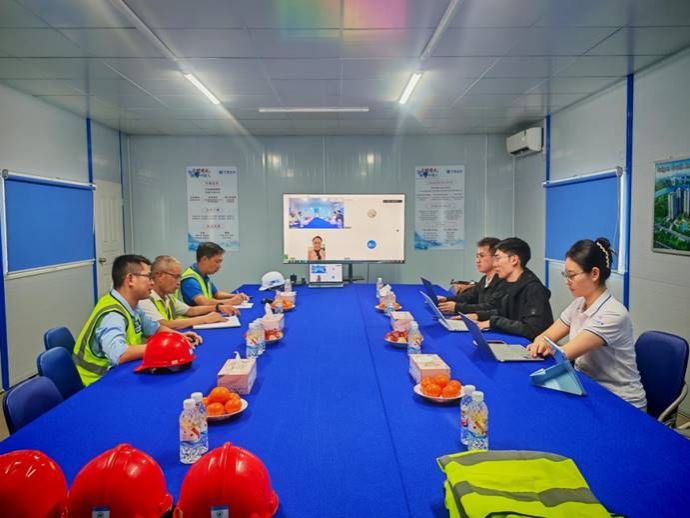
Practice team members learned that the project is situated in a sensitive residential area. The project department specially invested dedicated funds to construct comprehensive, high-standard noise and dust reduction facilities, implementing 24-hour dynamic environmental monitoring to minimize the impact of construction noise and dust. Through concrete actions practicing green construction and social responsibility, the project department not only gained high recognition from local residents and owners but also fully demonstrated the responsible and environmentally-conscious brand image of Chinese enterprises in overseas markets.

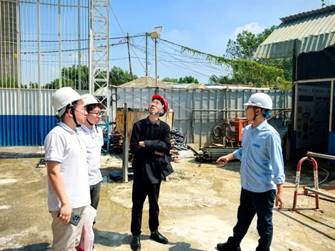
During a special symposium, the practice team engaged in in-depth exchanges with project representatives on compliant operation of overseas projects and the construction of localized talent echelons. Currently, the localization rate of this project has reached as high as 75%, effectively mitigating risks associated with standard alignment through efficient local integration.
Practice team member Jiao Yangchu remarked: "This visit inspires me not only to develop solid skills but also to shoulder youthful responsibility, upholding integrity and innovation in my future career to contribute to global demands.'"
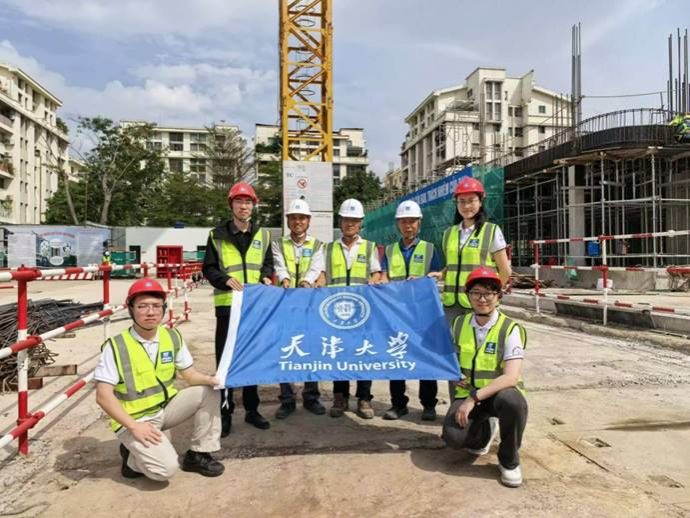
Perceiving Multicultural Heritage, Cultivating Patriotic Ideals and Responsibility
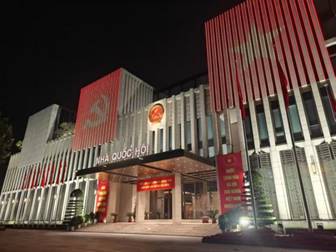
To deeply perceive the historical origins and contemporary interweaving of Sino-Vietnamese culture, the practice team visited historical landmarks such as the Ho Chi Minh Mausoleum, St. Joseph's Cathedral (Hanoi), the Ho Chi Minh City Hall, and the Central Post Office. During their visits to local traditional neighborhoods and historical sites, members meticulously observed architectural styles and social contexts, deeply appreciating the diverse integration formed by Sino-Vietnamese culture over a long history.

Practice team research lead Wang Yihan stated: "We will continue to conduct international engineering research, carefully compile typical cases of Chinese enterprises' overseas development, systematically summarize practical experiences in Chinese enterprises' overseas localized operations, technical standard exports, and green construction. "
Practice team faculty advisor Zong Chao remarked: "This research trip to Vietnam was an immersive practice for Tianjin University students, grounding their academic expertise in a global context. Through firsthand experiences, students gained genuine appreciation for the proven expertise and responsible commitment of Chinese construction. They truly broadened their global perspectives."
By College of Management and Economics
Editor: Sun Xiaofang
Weijin Road Campus: No. 92 Weijin Road, Nankai District, Tianjin
300072
Peiyangyuan Campus: No.135 Yaguan Road, Haihe Education Park, Tianjin
300350