

Tianjin University strengthens patent quality to boost commercialization
A major chemical factory rising in Jiangsu Province is offering fresh evidence of how high-quality patents can support high quality development. The ethylene-based vinyl acetate device with capacity of 400,000-ton-per-year which is patent licensed to Jiangsu Wanwei High-Tech Materials Co., Ltd by Tianjin University is now the world’s largest facility of its kind. It is also the latest outcome of long-term cooperation between Tianjin University and Wanwei Group. Developed by the team led by Professor Zhang Minhua, the project carries five core patents and has broken foreign dominance in key process technologies, marking a solid step forward in China’s efforts to achieve greater technological self-reliance in the production of vinyl acetate, an important chemical raw material.
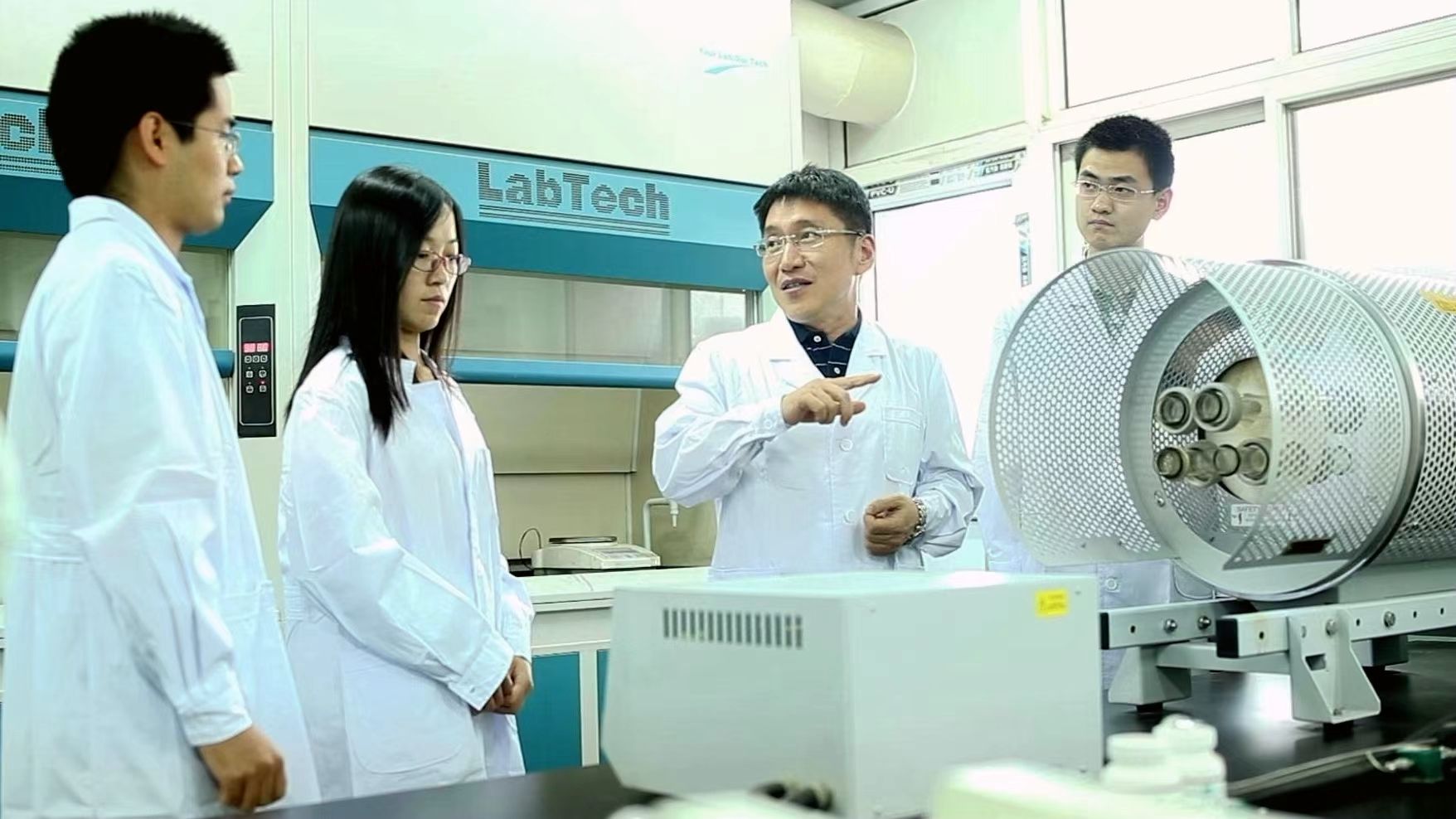
The new facility marks the third major collaboration between the two sides. Fourteen years ago, they jointly built a 100,000-ton biomass ethylene-based vinyl acetate unit in Guangxi. Two years ago, a second Tianjin University licensed 200,000-ton ethylene-based vinyl acetate device in Anhui went into operation. Today, the latest project has brought another successful application of the university’s green and efficient process technology. Over more than a decade, the technology has also been deployed in Zhejiang, Anhui, Fujian and Ningxia. Total patent licensing contract funding has reached 347 million yuan. Once all related projects are fully operational, annual vinyl acetate production is expected to reach 2.15 million tons, with annual output value exceeding 13 billion yuan.
The case has become a vivid example of Tianjin University’s efforts to improve intellectual property quality and accelerate the transformation of scientific and technological achievements. As China’s first modern university, Tianjin University has long linked scientific innovation and intellectual property operations with national strategies and socioeconomic development. In 2020, the university was selected as one of the country’s first national model universities for intellectual property, becoming one of 30 institutions nationwide to receive the designation. In recent years, the university has incorporated intellectual property work into the core tasks of its Double First-Class development, focusing on high quality creation, efficient utilization, strong protection and sound management. It has built a full lifecycle system covering the cultivation, application, protection and commercialization of intellectual property.
Tianjin University has worked to improve quality at the source by strengthening the full chain from patent cultivation to application and commercialization. The university reviewed and categorized more than 10,000 patent records, established differentiated management ledgers for patents of different value levels, and selected 130 high value transferable technologies for targeted promotion. It has also explored a pre-application evaluation system and worked with patent agencies and intellectual property protection centers to provide customized services. These efforts have helped shift the focus from quantity to quality while improving both patent quality and operational efficiency. At the same time, the university has explored new commercialization approaches including open licensing and use first, pay later models to activate existing patent resources and enhance market competitiveness.
Institutional support has also played a key role. Tianjin University has issued a series of policy documents, including its work plan for building a national intellectual property model university and measures on the management of technology transfer. These documents have clarified full process management, improved approval procedures, refined income distribution rules and strengthened risk control. Zhang said that in the past, technology transfer often involved multiple departments and a wide range of economic, legal and safety issues, making the process difficult for researchers focused on scientific work. The university has since built a comprehensive technology transfer service system and assigned dedicated technology managers to provide full process support. Approval procedures have been significantly streamlined, allowing researchers to focus on technological innovation while the university supports project implementation.
To help move more research results from laboratories to industry, Tianjin University has also restructured its service system and supporting platforms for commercialization. The university has built a professional team operating through market oriented mechanisms, including technology brokers and engineers serving the stages of technology development, incubation and industrial matching. It has also developed a coordinated layout in which the main campus serves as the core source of scientific innovation, the Binhai campus serves as a base for pilot scale testing and incubation, and Tiankai Higher Education Innovation Park provides space for industrial clustering and project expansion. In addition, the university has established a dedicated professional title pathway for technology transfer personnel, helping strengthen talent support for the commercialization of research results.
Tianjin University is now stepping up efforts in areas including advanced scientific instruments, brain computer interfaces, biomanufacturing, photonic quantum displays and hybrid robotics. Looking ahead, the university will continue to advance the construction of a national intellectual property model university and strengthen its capacity in intellectual property creation, utilization, protection and management, in order to better serve national strategic needs and contribute to high quality development.
By: Qin Mian
Weijin Road Campus: No. 92 Weijin Road, Nankai District, Tianjin
300072
Peiyangyuan Campus: No.135 Yaguan Road, Haihe Education Park, Tianjin
300350